1 #75: Basics of Opamp circuits - a tutorial on how to understand most opamp circuits
Alan Wolke's back-to-basics walkthrough of op amp circuits, recommended for understanding how the common configurations behave before building analogue stages.
Channel
49 recommended videos. Channel on YouTube
Alan Wolke's back-to-basics walkthrough of op amp circuits, recommended for understanding how the common configurations behave before building analogue stages.
Shows how to measure a cable's characteristic impedance with an oscilloscope using time domain reflectometry, often cited when transmission line questions come up.
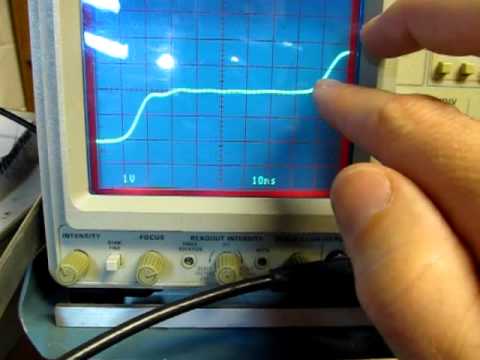
Builds a simple fast-edge pulse generator from a Schmitt trigger inverter and uses it with an oscilloscope as a makeshift time domain reflectometer for cables.
Alan Wolke compares split, single and virtual-ground supplies for op amps; people use it to work out how to bias inputs from a single battery.
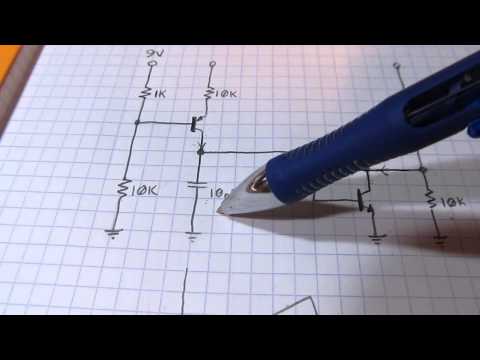
Alan Wolke explains discrete transistor current sources and mirrors, ending with LED driving and compliance voltage; suggested as an alternative to an LM317 current source.
A W2AEW video comparing the three basic BJT amplifier configurations, recommended for understanding gain and why common emitter is the usual choice.
Alan Wolke gives a gentle introduction to the BJT differential pair and how it forms an op amp input stage; people build and simulate along with it.
Alan Wolke demonstrates transmission line terminations and reflections on an oscilloscope, including standing waves on an unterminated line; people credit it with making reflections understandable.
A practical overview of the main capacitor families and where each belongs, recommended for anyone unsure which type a circuit needs.
Alan Wolke explains the Gilbert cell as a multiplier, mixer and modulator; best approached after long-tailed pairs, and people build or simulate it from the video.
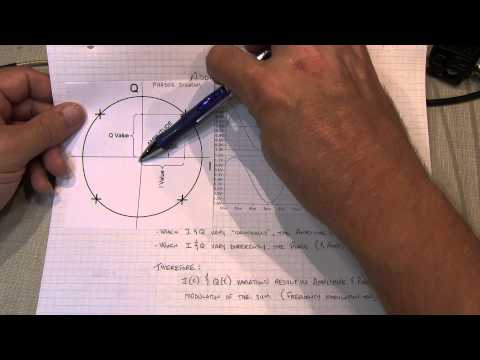
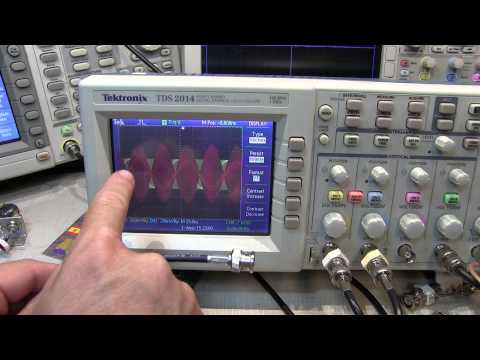
Alan Wolke explains IQ signals, modulation and demodulation with oscilloscope demonstrations; praised as one of the clearest introductions for people learning software-defined radio.
Demonstrates how ferrite beads filter high-frequency noise, suppress EMI and damp parasitic oscillation; praised for clear demonstrations, though some find it long.
Repeatedly linked to show, with real scope traces, why a diode goes across a relay or motor coil and how large the voltage spike gets.
A w2aew demonstration of why boards use several decoupling capacitors of different values in different places, and what that does to the supply rails.
A w2aew tutorial on measuring a circuit's output impedance with an oscilloscope, regularly given as the practical answer to source resistance questions.
w2aew walks through an R-2R ladder DAC using Thevenin reduction and superposition, cited as a worked example of both circuit analysis techniques.
A w2aew explanation of how JFETs and MOSFETs operate, offered as a clearer route to understanding field effect transistors than a text answer.
Explains how to bias a transistor stage so the operating point does not depend much on the device's beta, using feedback.
A survey of ways to build a circuit more permanently than a breadboard, suggested to people ready to move a working design to something sturdier.
Explains the Vbe multiplier, or rubber diode, and how it sets bias in class B output stages; the usual link when someone uses plain diodes instead.
Linked for its clear explanation of a current source circuit and as an entry point into a well regarded analogue electronics channel.
Linked to show crossover distortion in op amps such as the LM358, usually when someone's amplifier output is unexpectedly distorted or audibly rough.
Builds a simple octopus curve tracer that plots component I-V curves on an oscilloscope; recommended as a cheap way to see a diode's knee voltage.
A w2aew explainer on how 1x and 10x oscilloscope probes differ, why the attenuation matters and how probe capacitance affects measurements.
Alan Wolke makes RF standing waves on transmission lines visible on the bench; recommended for building intuition about reflections, SWR and quarter-wave transformers.
w2aew shows how to build a low-inductance scope probe socket into a board; recommended for measuring fast edges and switching spikes without ground-lead ringing.
Explains why a function generator output can read twice the set amplitude on a scope without a 50 ohm termination, and how termination fixes it.
Covers how an op amp's gain bandwidth product and slew rate limit a closed loop circuit, used to explain unexpected bandwidth results.
Shows how to measure capacitance and inductance using an oscilloscope and a cheap pulse generator with fast edges built from a Schmitt trigger inverter.
Builds a simple three-transistor sawtooth oscillator and shows it running on a scope; people copy the circuit but report it gets finicky at higher frequencies.
A w2aew tutorial on measuring a capacitor's ESR with a function generator and oscilloscope, recommended when diagnosing failing electrolytics in repair work.
A practical demonstration of how the length of a scope probe's ground connection distorts fast edges, cited whenever ringing or probe grounding questions arise.
An introduction to the cascode amplifier and why it tames the Miller effect, offered as a starting point when the topic comes up.
A w2aew explainer on analogue panel meters, praised for teaching how to characterise and drive them, often paired with his follow up video.
Hidden gemA detailed explanation of the 555 timer in monostable mode, linked both by its maker and by others as a clear answer to one shot timing questions.
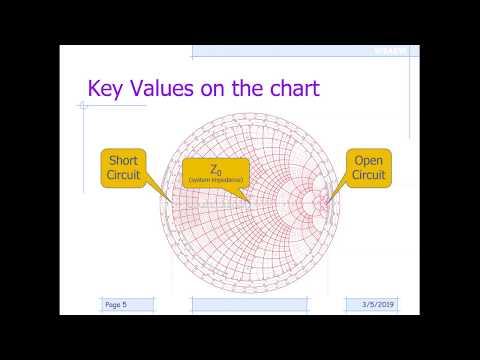
W2AEW walks through Smith chart fundamentals and finishes with an L network matching example, recommended as a clear RF primer.
A bench demonstration of LC resonance from w2aew, recommended for seeing a tank circuit behave on a scope rather than only in equations.
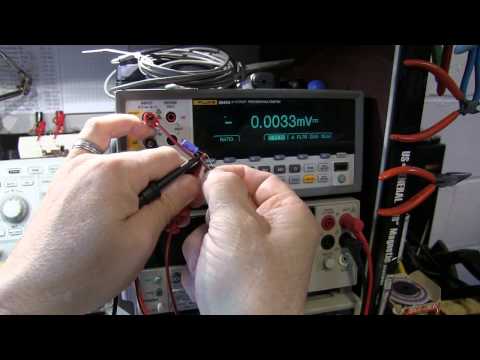
Regularly linked to explain why a meter on its current range reads low in low voltage circuits, because of its own internal resistance.
A w2aew tutorial on how a common emitter BJT amplifier's gain and frequency response are set by its external components, backed by bench measurements.
A demonstration of using ordinary and PIN diodes as signal switches, cited when people ask how to switch low level audio or high frequency signals electronically.
A clear explanation of what decibels mean and how dB ratios relate to power, voltage and references like dBm, offered to anyone confused by the units.
Explains the working principle of a directional coupler using a homemade example like those inside SWR meters, cited in discussions of reflected power.
A playlist of oscilloscope tutorials from a presenter regarded as the go-to teacher on scopes, covering the basics that apply to cheap and serious instruments alike.
w2aew tutorial on varactor diode behaviour with real measurements and a VCO circuit demonstration, linked when tuning diode questions arise.
Shows how a signal generator plus a scope set to XY display can plot a diode curve without expensive equipment.
A practical way to check a MOSFET out of circuit with a multimeter, routinely suggested to beginners trying to work out whether a transistor has failed.
Alan Wolke covers how mixers convert frequencies in radio receivers, including why switching produces harmonic products; recommended alongside his diode ring mixer video.
Alan Wolke explains how a diode ring mixer works and measures one on the bench; people build their own mixers from it and return with theory questions.
An explanation of an automatic audio level control circuit built with germanium diodes, shared as a worked example with a schematic.