1 EEVblog #279 - How NOT To Blow Up Your Oscilloscope!
Widely cited explanation of why oscilloscope grounds are tied to earth and how careless probing of mains or earthed circuits can destroy the scope.
hobby and professional electronics, microcontrollers, PCB design, repair, test equipment, making
921 videos that people in 13 electronics and making communities kept recommending to each other, year after year. Not an algorithm's guess: a count of real recommendations from real threads.
Widely cited explanation of why oscilloscope grounds are tied to earth and how careless probing of mains or earthed circuits can destroy the scope.
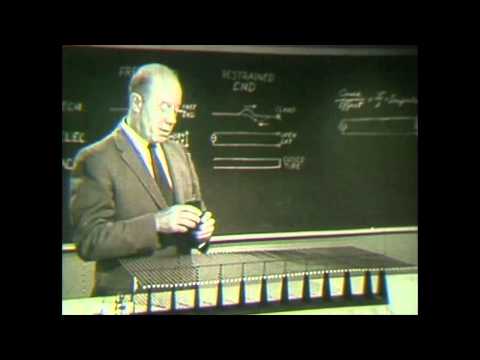
A vintage Bell Labs film using a mechanical wave machine to show reflections, standing waves and impedance mismatch, often linked to make transmission line concepts intuitive.
Dave Jones explains why decoupling capacitors are needed, how parasitics limit them, and why mixing values in parallel is not as simple as adding capacitance.
Dave Jones's long introduction to op-amps covering the basic rules, virtual ground, common configurations and part selection; recommended to learners who found textbook treatments hard going.
First part of Dave Jones's soldering tutorial series, covering irons, tips, solder and technique; often named as the one soldering guide a newcomer needs.
Widely cited as the place to start with Arduino, a tutorial series that explains the electrical basics alongside the code.
Shows how to program ATtiny chips from the Arduino IDE with an Arduino acting as programmer, recommended for moving small projects off a full Arduino board.
Rick Hartley's talk on grounding and return current paths in PCB design, praised as dense with practical EMC insight that formal courses often miss.
The opening lesson of the vintage PACE soldering course, regarded as the definitive grounding in flux, wetting and joint quality despite its age.
Ben Eater's playlist building an 8-bit computer on breadboards from basic logic chips, widely recommended for understanding how a processor works from the ground up.
First episode of Mike's series reverse engineering an iPod nano display, usually linked to show how much work driving a proprietary screen really takes.
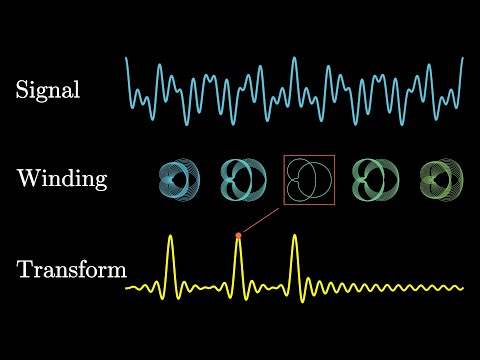
3Blue1Brown's animated introduction to the Fourier transform, frequently recommended to anyone who wants an intuitive feel for the frequency domain.
Dave Jones's long introduction to op-amps covering the basic rules, virtual ground, common configurations and part selection; recommended to learners who found textbook treatments hard going.
First part of Dave Jones's soldering tutorial series, covering irons, tips, solder and technique; often named as the one soldering guide a newcomer needs.
Widely cited as the place to start with Arduino, a tutorial series that explains the electrical basics alongside the code.
Shows how to program ATtiny chips from the Arduino IDE with an Arduino acting as programmer, recommended for moving small projects off a full Arduino board.
Compares diode and P-channel MOSFET reverse polarity protection, showing the MOSFET wastes far less power; a common reference when adding input protection to a board.
A clear explanation of how a 74HC595 shift register works and how to drive many LEDs from a few Arduino pins.
Strongly recommended, but by fewer people than the famous ones. Worth your time.
A basic soldering lesson, praised as excellent and linked by others as the how-to for joining wires and soldering through hole pins.
Hidden gemRick Hartley's long talk on controlling noise and EMI in circuit boards; cited on electronics.stackexchange.com for edge stitching vias and why rise time, not bit rate, sets bandwidth.
Hidden gemA slow-paced Arduino course for complete newcomers, praised for its clear explanations and credited with getting people into the hobby.
Hidden gemA US Department of Defense training film on DC motors and generators, praised for building intuition better than most lectures.
Hidden gemEric Bogatin explains with Robert Feranec where return current really flows and why split planes cause trouble; repeatedly recommended for anyone routing signals between layers.
Hidden gemWarmly recommended for learning how a processor works from the ground up by building a simple computer from scratch and seeing code run on real hardware.
Hidden gem