1 How Does a Transistor Work?
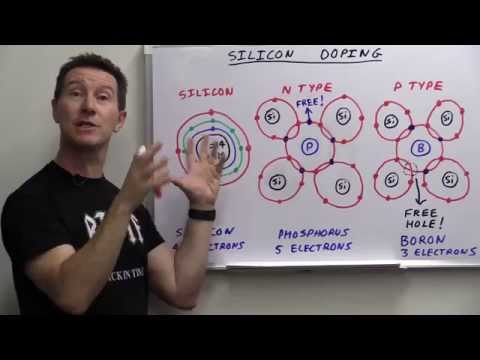
A short, slightly silly explanation of how transistors work at the semiconductor level, often linked for anyone who has not yet grasped the basics.
Topic
15 videos. Ranked by independent recommendations, not by views.
A short, slightly silly explanation of how transistors work at the semiconductor level, often linked for anyone who has not yet grasped the basics.
Ben Eater's explanation of how a bipolar transistor works, repeatedly offered as a very helpful way to grasp the basics.
Signal Path tutorial on class B and class AB output stages, recommended for learning how an output stage drives a speaker and why the bias diodes are there.
Dave Jones' EEVblog explainer on how bipolar transistors actually work at the junction level, often handed to beginners puzzled by the basic NPN picture.
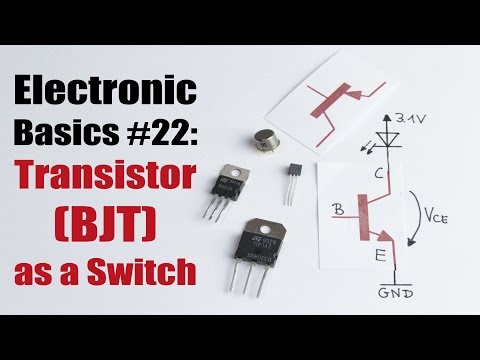
A GreatScott tutorial on using a bipolar transistor as a switch, recommended when a microcontroller pin needs to drive a buzzer, fan or other load.
Ali Hajimiri's lecture series on analogue circuit design, highly rated for building intuition about amplifier design and semiconductor physics including BJTs.
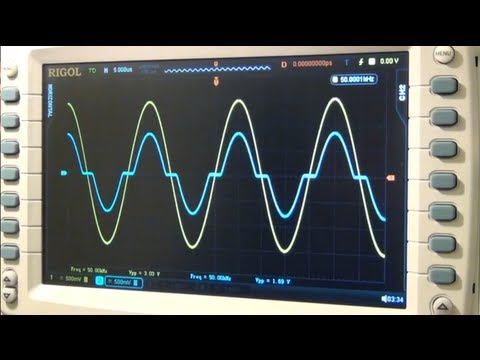
Hidden gemA w2aew tutorial on how a common emitter BJT amplifier's gain and frequency response are set by its external components, backed by bench measurements.
Explains how to use a transistor in practice, as a resistor controlled by the base rather than through semiconductor physics; liked by learners put off by textbooks.
SparkFun's Pete gives a plain overview of how bipolar transistors work and how to use them as switches, paired with his MOSFET episode.
A transistor explainer that gets recommended as a starting point for how components work, though one questioner found its treatment of BJT saturation stopped at the surface.
A Caltech lecture from Ali Hajimiri, praised for explaining why a bipolar transistor is really voltage controlled rather than base current controlled.
Hidden gemRecommended for working through BJT voltage divider bias calculations, including replacing the base network with its Thevenin equivalent before analysing an amplifier.
Shown as a quick way to check whether a bipolar transistor still works using an ordinary multimeter's resistance range.
A clear tutorial on biasing a common emitter BJT amplifier and picking collector and emitter resistors, cited by learners working through bias point and resistor ratio questions.
A visual explanation of how BJT and FET transistors operate and differ, linked by a few people as a helpful way to build intuition about them.