1 EEVblog #262 - World's Simplest Soft Latching Power Switch Circuit
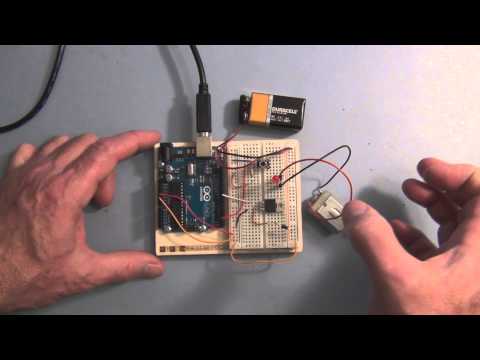
Dave Jones presents a low part count soft latching power switch built around a P-channel MOSFET and push button; hobbyists use it as a starting point for one-button power control.
Topic
24 videos. Ranked by independent recommendations, not by views.
Dave Jones presents a low part count soft latching power switch built around a P-channel MOSFET and push button; hobbyists use it as a starting point for one-button power control.
Compares diode and P-channel MOSFET reverse polarity protection, showing the MOSFET wastes far less power; a common reference when adding input protection to a board.
An Electronic Basics episode on using a MOSFET as a switch, offered as an introduction to driving higher-voltage loads from a microcontroller pin.
A beginner tutorial on using BJTs and MOSFETs as switches, often suggested when a microcontroller pin needs to drive a motor, laser or other larger load.
Short explainer on how MOSFETs work and how to switch loads with them; offered to people moving from a small BJT to a MOSFET for motors.
Afrotechmods explains a discrete MOSFET H-bridge motor speed controller; suggested for people moving beyond driver modules to understand the basics.
Jeri Ellsworth makes an NMOS transistor at home step by step, the usual link when someone asks whether a transistor can be made by hand.
A brief beginner-level MOSFET video, part of a longer series, suggested to Arduino users whose transistor switches run hot or refuse to turn fully on.
A w2aew explanation of how JFETs and MOSFETs operate, offered as a clearer route to understanding field effect transistors than a text answer.
Shows how to build a SPICE MOSFET model from datasheet curves, suggested for simulation work, though one answer warns that fitting from two points gives large errors.
A practical example of switching 12V loads such as LED strips from an Arduino with a MOSFET, which viewers have used as the basis for their own builds.
A beginner tutorial on driving a DC motor from an Arduino through a MOSFET, linked whenever someone needs to switch more current than a pin can supply.
Walks through several cheap ways to shift logic between 5 V and 3.3 V and compares how each holds up as frequency rises.
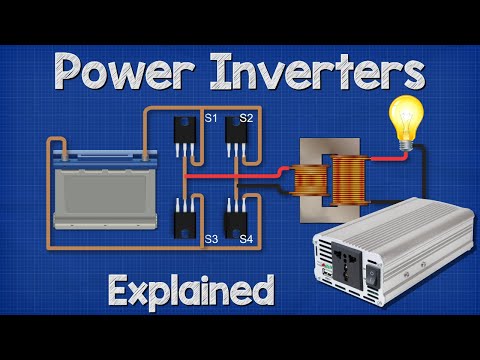
Linked alongside MOSFET and inverter discussions as a helpful explanation of power switching, and suggested as a project worth recreating with a microcontroller.
Recommended Andreas Spiess video on a MOSFET latch that lets a microcontroller hold its own supply on after a button press, then cut it off when finished.
Recommended as the best explanation of MOSFET H-bridges, including how to drive the P channel high side and other FET design issues that basic guides miss.
Hidden gemA GreatScott explainer on why a microcontroller pin struggles to switch a MOSFET quickly and how a gate driver circuit solves it.
A practical way to check a MOSFET out of circuit with a multimeter, routinely suggested to beginners trying to work out whether a transistor has failed.
Offered as a simple way to vary a brushed DC motor's speed with a potentiometer and a MOSFET rather than dropping the supply voltage.
Recommended as a tutorial on bootstrapping the gate so an N-channel MOSFET can switch the high side of a circuit.
A DIY induction heater build that people copy and refer back to, though at least one builder reported overheating MOSFETs.
Explains bootstrapping the gate of a high-side N-channel MOSFET with discrete parts; people copy the circuit and simulate it in LTspice to check their understanding.
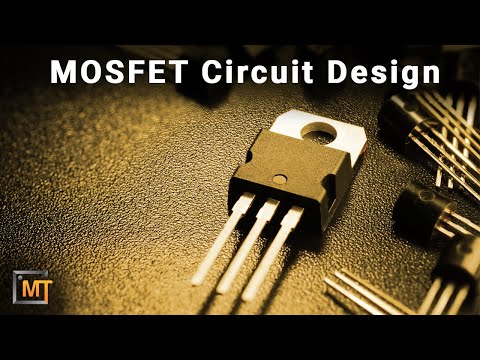
Practical tips for designing power MOSFET circuits, including gate drive and dissipation calculations; offered as help for MOSFETs running hot or loading a microcontroller pin.
GreatScott builds an ultrasonic mist maker from a piezo disc, 555 timer, MOSFET and inductor; often referenced when people ask how the drive circuit produces oscillation.