1 EEVblog #601 - Why Digital Oscilloscopes Appear Noisy
Dave Jones explains why digital oscilloscopes look noisier than analogue ones, often linked when a new scope's trace looks fuzzy or someone claims analogue has infinite resolution.
Topic
8 videos. Ranked by independent recommendations, not by views.
Dave Jones explains why digital oscilloscopes look noisier than analogue ones, often linked when a new scope's trace looks fuzzy or someone claims analogue has infinite resolution.
Rick Hartley's long talk on controlling noise and EMI in circuit boards; cited on electronics.stackexchange.com for edge stitching vias and why rise time, not bit rate, sets bandwidth.
Hidden gemShort demonstration of swapping the long probe ground lead for a ground spring; often cited on electronics.stackexchange.com when a noisy scope trace is really a probing artefact.
A sound clip of mains frequency transformer hum, linked so people can compare a buzzing device or power supply against a known reference.
Dave Jones explains switch and relay contact bounce and the hardware and software ways to debounce it; recommended when microcontroller interrupts misfire on noisy inputs.
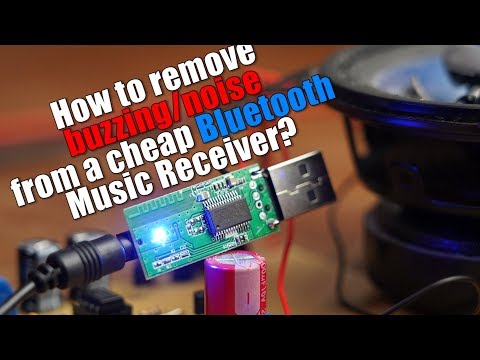
GreatScott tracks down buzzing from a cheap Bluetooth audio receiver and tries fixes; recommended for ground loop noise and the isolated DC-DC converter cure.
Dave Jones demonstrates how to identify and track down common mode noise; pointed to when scope readings of small signals look swamped by interference.
Bob Pease and colleagues discuss oscilloscope probing, including magnetic noise pickup in the ground lead; cited for its remarks on floating scopes and measuring switchers.