1 EEVblog #279 - How NOT To Blow Up Your Oscilloscope!
Widely cited explanation of why oscilloscope grounds are tied to earth and how careless probing of mains or earthed circuits can destroy the scope.
Topic
37 videos. Ranked by independent recommendations, not by views.
Widely cited explanation of why oscilloscope grounds are tied to earth and how careless probing of mains or earthed circuits can destroy the scope.
Dave Jones runs through the equipment a hobby electronics lab needs, often recommended to people choosing a first oscilloscope or kitting out a bench.
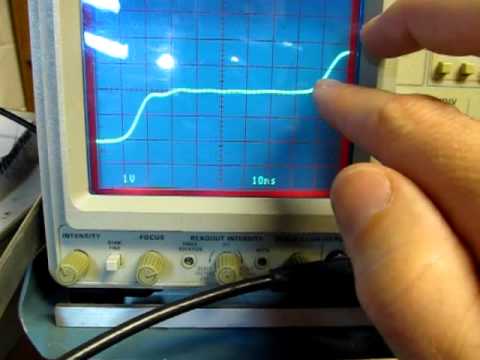
Shows how to measure a cable's characteristic impedance with an oscilloscope using time domain reflectometry, often cited when transmission line questions come up.
Builds a simple fast-edge pulse generator from a Schmitt trigger inverter and uses it with an oscilloscope as a makeshift time domain reflectometer for cables.
Dave Jones explains how passive x1 scope probes work and why their bandwidth is far lower than x10; cited when fast signals look wrong through a switchable probe.
Dave Jones covers measuring power supply ripple and noise with an oscilloscope; a 40 minute episode cited when probing switching converters shows misleading spikes.
Often shared with newcomers asking what to buy for a first electronics bench, with the usual caveat that not everything listed is essential.
Alan Wolke demonstrates transmission line terminations and reflections on an oscilloscope, including standing waves on an unterminated line; people credit it with making reflections understandable.
Repeatedly linked to show, with real scope traces, why a diode goes across a relay or motor coil and how large the voltage spike gets.
The EEVblog review of the Rigol DS1054Z, linked whenever someone asks which first oscilloscope to buy and wants to see its features demonstrated.
Ben Eater captures a USB keyboard's signals on an oscilloscope and works through the protocol manually, recommended to anyone trying to understand USB at wire level.
Builds a simple octopus curve tracer that plots component I-V curves on an oscilloscope; recommended as a cheap way to see a diode's knee voltage.
Alan Wolke makes RF standing waves on transmission lines visible on the bench; recommended for building intuition about reflections, SWR and quarter-wave transformers.
Dave Jones explains why digital oscilloscopes look noisier than analogue ones, often linked when a new scope's trace looks fuzzy or someone claims analogue has infinite resolution.
w2aew shows how to build a low-inductance scope probe socket into a board; recommended for measuring fast edges and switching spikes without ground-lead ringing.
Explains why a function generator output can read twice the set amplitude on a scope without a 50 ohm termination, and how termination fixes it.
Shows how to measure capacitance and inductance using an oscilloscope and a cheap pulse generator with fast edges built from a Schmitt trigger inverter.
A w2aew tutorial on measuring a capacitor's ESR with a function generator and oscilloscope, recommended when diagnosing failing electrolytics in repair work.
Short demonstration of swapping the long probe ground lead for a ground spring; often cited on electronics.stackexchange.com when a noisy scope trace is really a probing artefact.
A practical demonstration of how the length of a scope probe's ground connection distorts fast edges, cited whenever ringing or probe grounding questions arise.
Dave Jones's review of the Rigol DS1054Z, regularly cited when someone asks which entry-level oscilloscope is worth buying.
A bench demonstration of LC resonance from w2aew, recommended for seeing a tank circuit behave on a scope rather than only in equations.
A scope demonstration of the voltage spike an inductor or relay coil produces when switched off, used to explain why flyback diodes matter.
An EEVblog teardown of a Rigol oscilloscope, cited for details of its internals such as the switching supply, relay count and build quality.
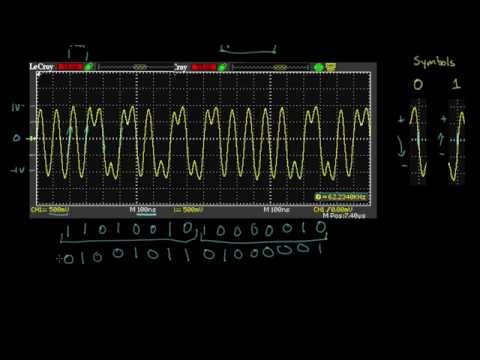
Ben Eater probes a 10BASE-T link with an oscilloscope and decodes the Manchester-encoded bits by hand; part of his networking series and a common starting point for line-coding questions.
A playlist of oscilloscope tutorials from a presenter regarded as the go-to teacher on scopes, covering the basics that apply to cheap and serious instruments alike.
A detailed look inside a 100 GHz LeCroy oscilloscope, showing how the front end splits and down-converts the signal, enjoyed as exotic test gear.
EEVblog's Dave argues that beginners should pick up a cheap second-hand analogue oscilloscope, a view often cited when people ask what scope to buy.
Shows how a signal generator plus a scope set to XY display can plot a diode curve without expensive equipment.
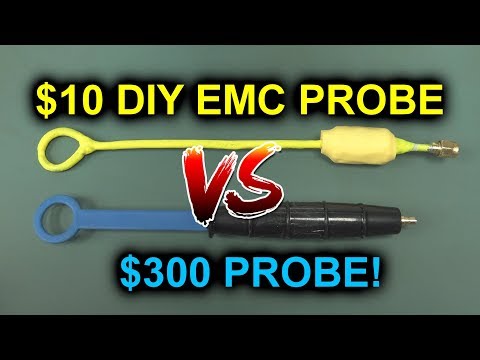
Dave from EEVblog shows how to make a cheap magnetic field probe from a short coil and use it to hunt down EMI sources on a board.
EEVblog's walkthrough of unlocking a Rigol DS1052E to 100MHz bandwidth, cited when people weigh up which budget oscilloscope to buy.
A Mr Carlson's Lab tour of a vintage Tektronix 555 oscilloscope, recommended to anyone learning about older test equipment and how it works inside.
Andreas Spiess works through powering an ESP8266 from a battery, covering the calculations involved, oscilloscope traces and adding a capacitor across the supply pins.
Dave Jones demonstrates how to identify and track down common mode noise; pointed to when scope readings of small signals look swamped by interference.
Cited for a moment showing popcorn noise from a semiconductor and for illustrating how microvolt level readings react to the slightest air movement.
Bob Pease and colleagues discuss oscilloscope probing, including magnetic noise pickup in the ground lead; cited for its remarks on floating scopes and measuring switchers.
EEVblog tears down the Rigol DS1052E oscilloscope, cited for what it reveals about the hardware, including the overclocked ADC parts inside.