1 EEVblog #831 - Power A Micro With No Power Pin!
Demonstrates a microcontroller running through the protection diodes on its I/O pins with the supply pin disconnected; cited whenever a supposedly unpowered chip keeps working.
Topic
22 videos. Ranked by independent recommendations, not by views.
Demonstrates a microcontroller running through the protection diodes on its I/O pins with the supply pin disconnected; cited whenever a supposedly unpowered chip keeps working.
Compares diode and P-channel MOSFET reverse polarity protection, showing the MOSFET wastes far less power; a common reference when adding input protection to a board.
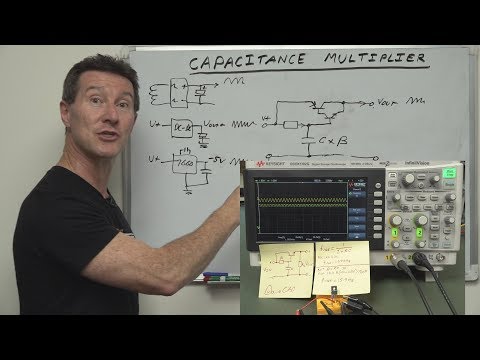
Dave Jones shows that linear regulators reject little high frequency ripple and demonstrates a capacitance multiplier as a cheap fix; a regular link in ripple filtering questions.
Alan Wolke compares split, single and virtual-ground supplies for op amps; people use it to work out how to bias inputs from a single battery.
A beginner tutorial on linear regulators such as the 7805, ending with a USB charger circuit; suggested to people powering an Arduino or Raspberry Pi.
Covers diode basics and builds a transformer, rectifier and capacitor power supply; recommended within a beginner series, including on why parallel diodes do not share current.
An Afrotechmods tutorial on building a variable linear power supply around the LM317, often suggested as a first analogue project.
Dave Jones covers measuring power supply ripple and noise with an oscilloscope; a 40 minute episode cited when probing switching converters shows misleading spikes.
Andreas Spiess covers ESP8266 sleep modes and measures its current spikes; cited both for low-power design and for why the module needs decent supply capacitance.
A teardown and analysis of a cheap USB power supply, cited when people ask how to test chargers and whether bargain units are safe.
An introduction to cheap LM2596 step-down converter modules, linked for anyone wanting to understand what these boards do before buying one.
GreatScott builds a DIY buck converter with an Arduino driving a MOSFET, cited as a clear way to understand how step-down switching converters work.
Compares a buck converter and a linear regulator on the bench for efficiency and output noise; cited when choosing how to drop voltage in battery projects.
A short, intuitive introduction to how a boost converter raises voltage, recommended to anyone who needs the basics before building or choosing one.
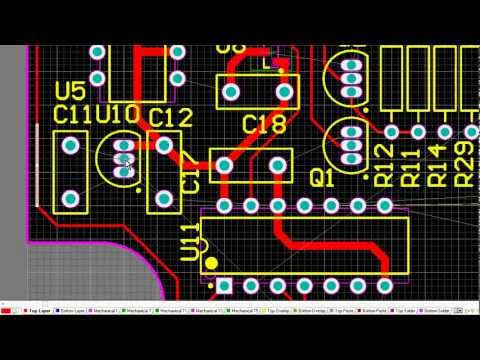
Dave Jones laying out a real power supply board, often named as the main video to watch for PCB layout best practice once a schematic exists.
An EEVblog teardown of a programmable bench power supply, cited for its remote interfaces and a note on tinned exposed traces for current.
A five minute introduction to the bare ESP8266 module, covering how to power and wire it up, recommended as essential before a first ESP-01 project.
Cited as a hands-on build of a small step-up boost converter driven by an ATtiny85, used as a reference for DIY power conversion.
Cited as a GreatScott video that explains some of how USB-C works and shows a ready-made USB-PD trigger board being used to obtain a higher voltage.
Opening video of a power supply series that explains transformers before later parts cover rectifiers and regulators, recommended to beginners building a first linear supply.
An EEVblog repair of a fire damaged power supply board, linked to show both how a small capacitor can fail and how charred board material is removed.
An electronupdate teardown that decaps a Raspberry Pi's BCM2835 and inspects the board's power supply parts, cited for low level hardware details.