1 The Pain of Electricity (AC versus DC)
ElectroBOOM shocks himself with AC and DC to show how each feels; linked as an entertaining answer to questions about whether a voltage will hurt.
Topic
23 videos. Ranked by independent recommendations, not by views.
ElectroBOOM shocks himself with AC and DC to show how each feels; linked as an entertaining answer to questions about whether a voltage will hurt.
Demonstrates ultracapacitors dumping large currents; cited in threads on shorting capacitors and on whether supercapacitors could replace a car battery.
Cited in threads on series battery stacks as an example of a 244-cell 9 V stunt, which answerers describe as reckless rather than instructive.
ElectroBOOM's light-hearted look at electrostatic discharge, including handheld ESD guns; linked in threads asking how worried to be about static.
Big Clive demonstrates several ways to run an LED as a mains indicator on 120 V and 230 V, recommended when resistor-only circuits overheat or reverse voltage harms the LED.
Big Clive's warning about microwave oven transformers, shared to make clear how easily these projects injure or kill.
A teardown and analysis of a cheap USB power supply, cited when people ask how to test chargers and whether bargain units are safe.
A Fluke sales video testing several multimeters, almost always linked at one timestamp as a caution against buying too cheap a meter.
A cautionary tale about a multimeter failing on mains voltage, shared to stress why meter input protection and ratings matter.
An older EEVblog video blowing up electrolytic capacitors, linked to show what happens when polarity is reversed and why it matters for safety.
Linked as an example of a home-built arc furnace running from a microwave oven transformer; viewers note it is fiddly and raises real safety questions.
ElectroBOOM measures how the human body behaves as a capacitor and conductor, cited in discussions of shocks, static and finger-poking circuits.
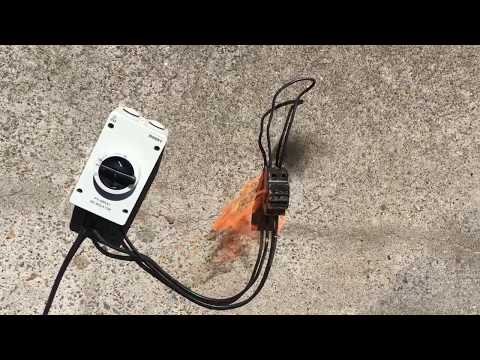
Demonstrates a polarised DC breaker failing when wired in reverse, with the arc sustained inside it; cited when people ask whether breaker polarity matters in battery systems.
Footage of linemen working on energised high voltage lines from a helicopter, linked to illustrate potential equalisation and conductive protective suits.
Shared as a short warning about feeding power back into a host's USB port, which breaks the specification and can damage the computer.
Big Clive examines some USB power supplies and finds poor isolation, used to show how a mains charger can fall short on safety.
Dave Jones explains the layers of input protection inside a multimeter, including HRC fuses and shielding; often cited when someone asks whether a mistake has damaged their meter.
Hidden gemShows Li-ion cells being overcharged until they fail and burn; linked as a warning in threads about home-made chargers.
Explains ghost voltages and how a meter's low impedance setting tells real mains voltage from induced readings, shared in safety discussions.
Shows what happens when an acetone vapour bath catches fire, cited to argue that the fire risk of ABS smoothing is smaller than often assumed.
Demonstrates rewinding a microwave transformer for very high current; linked for the technique, alongside clear warnings that this kind of project is dangerous.
Footage of electrolytic capacitors bursting, shared both for entertainment and to illustrate how the scored vents on the cans fail in a controlled way.
Shared as a warning about counterfeit fuses and safety parts sold through online marketplaces, with the message that cheap sources are not worth the risk.