1 Reverse Engineering the iPod Nano 6 LCD interface
First episode of Mike's series reverse engineering an iPod nano display, usually linked to show how much work driving a proprietary screen really takes.
Audience
Assumes real experience. The videos experts recommend to each other.
First episode of Mike's series reverse engineering an iPod nano display, usually linked to show how much work driving a proprietary screen really takes.
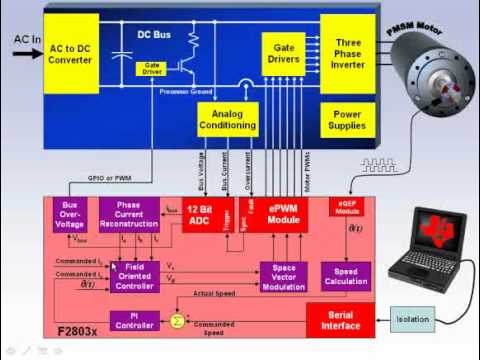
A Texas Instruments presentation on field oriented control for three-phase motors, cited to explain how controllers command torque by steering phase currents.
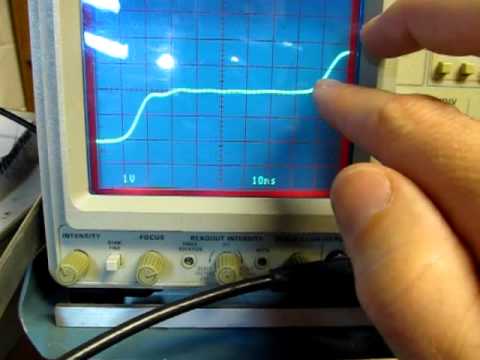
Shows how to measure a cable's characteristic impedance with an oscilloscope using time domain reflectometry, often cited when transmission line questions come up.
Rick Hartley's talk on routing differential pairs, recommended for understanding reference planes, return currents and termination at high speeds.
Linear Technology's tutorial on checking op-amp loop stability and phase margin in LTspice; people follow its method, then ask why their own simulations disagree.
Applied Science uses a laser diode's built-in monitor photodiode for self-mixing interferometry, measuring distance and sub-micron vibration; cited when people ask about the third pin.
Alan Wolke explains the Gilbert cell as a multiplier, mixer and modulator; best approached after long-tailed pairs, and people build or simulate it from the video.
Rick Hartley explains how to order, pour and couple PCB layers, with recommended four, six and eight-layer stackups that pair every signal and power layer with ground.
Demonstrates a Raspberry Pi driving an iPhone 4 screen through a MIPI DSI to HDMI adapter board; cited when people ask about reusing phone displays.
Mehdi Sadaghdar challenges Walter Lewin's conclusion that Kirchhoff's voltage law fails in a changing magnetic field, using a modified experiment; central to a long-running debate.
An EEVblog demonstration of dead bug soldering a tiny surface mount chip, offered as a workable technique for prototyping such packages, with warnings that it needs skill.
Professor Razavi's university lecture series on microelectronics, repeatedly recommended as the place to learn undergraduate semiconductor and analogue circuit theory.
Pointed to when someone asks about wiring a phone camera to a microcontroller, as a realistic look at the work and hardware involved.
Shows how to build a SPICE MOSFET model from datasheet curves, suggested for simulation work, though one answer warns that fitting from two points gives large errors.
Shows the process of stripping the epoxy from an integrated circuit to expose the die, linked to illustrate what decapping involves and how chips are encapsulated.
A Signal Path lecture on how delta-sigma converters turn a one-bit oversampled stream into high resolution data, with the opening section accessible even without the maths.
Eric Bogatin's AltiumLive talk challenges inherited PCB rules, cited for why mixed-value decoupling capacitors are outdated with surface-mount parts and why signal-layer ground pour can hurt.
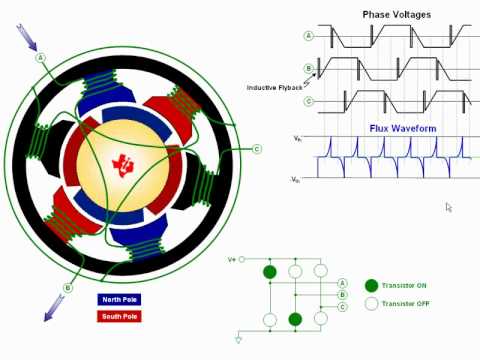
A Texas Instruments video on driving brushless motors, suggested to people debugging their own motor controllers or replacing an off the shelf ESC.
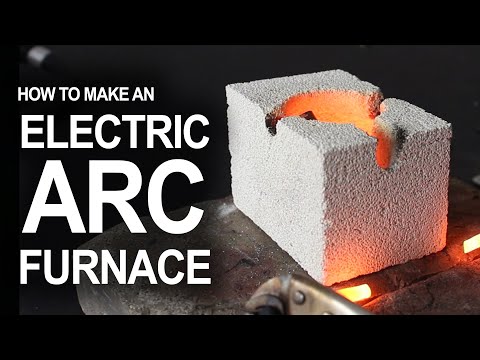
Linked as an example of a home-built arc furnace running from a microwave oven transformer; viewers note it is fiddly and raises real safety questions.
Rick Hartley's long talk on controlling noise and EMI in circuit boards; cited on electronics.stackexchange.com for edge stitching vias and why rise time, not bit rate, sets bandwidth.
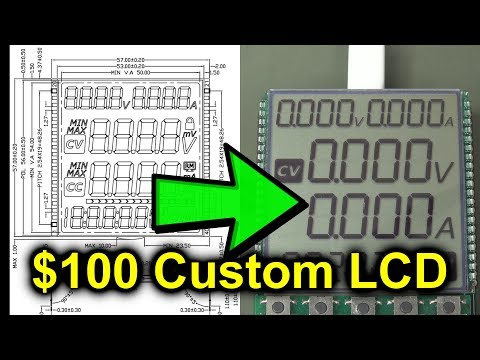
Hidden gemPart three of Dave Jones's EEVblog series on designing and ordering a custom LCD, following the project through to receiving and testing the finished units.
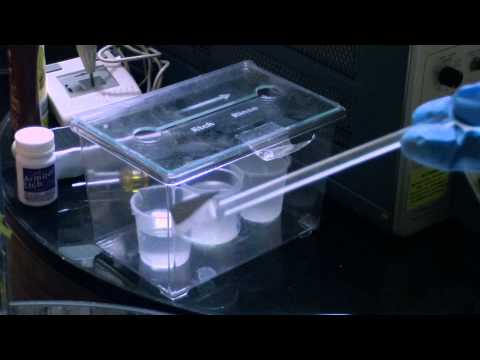
Ben Krasnow builds a liquid crystal display from scratch, cited to show how LCD segments switch and as a clear example of spin coating a substrate.
ElectroBOOM builds a Marx generator for big arcs; shared for the basic idea rather than exact instructions, sometimes with a safety warning.
A 2011 cnlohr video showing a home process for making circuit boards on glass, linked as proof that unusual PCB substrates are possible.
Shared as an impressive demonstration of acoustic levitation using phased ultrasonic transducer arrays, often cited when people discuss beam steering or standing waves.
A deep look at measuring femtoampere level op amp bias and leakage currents, which accidentally turned into a cosmic ray detector, cited for ultra low current design.
A gait tracking demo using an IMU with published code, linked to show that position from accelerometer data is possible but hard to get accurate.
Ali Hajimiri's lecture series on analogue circuit design, highly rated for building intuition about amplifier design and semiconductor physics including BJTs.
Hidden gemA long conference talk on PCB layout, grounding and stackup that practitioners cite when discussing ground pours and multilayer board design.
Ben Heck reverse engineering a bare LCD panel and driving it with an FPGA, cited to show how much skill and equipment reusing a salvaged screen demands.
Jeri Ellsworth fabricating transistors and simple chips in a home lab, cited to show it is possible but demanding, hazardous and not a beginner project.
Mike's multi-part series reverse engineering an iPod nano display, praised as a thorough practical lesson in working out unknown screen interfaces.
Hidden gemA Bob Pease video on measuring and understanding amplifier distortion, including the trick of loading an LM324 or LM358 output to reduce crossover distortion.
Jason Turner's conference talk writing a Commodore 64 game in modern C++, cited to show how well compilers optimise and how constexpr suits tiny targets.
Shown as proof that two displays can run on an older Pi through a USB adapter, though it needs kernel changes and performance is limited.
Recommended as Alan Oppenheim's full Signals and Systems lecture course, about 25 hours, covering convolution and the foundations of signal processing.
A Caltech lecture from Ali Hajimiri, praised for explaining why a bipolar transistor is really voltage controlled rather than base current controlled.
Hidden gemA detailed look inside a 100 GHz LeCroy oscilloscope, showing how the front end splits and down-converts the signal, enjoyed as exotic test gear.
A build video showing an Odroid-W single board computer fitted inside a Game Boy Advance SP, often cited as proof that a Pi Zero handheld is possible.
An impressive inverted pendulum balancing demonstration, used to show what control theory makes possible and compared with simpler hobby versions.
A conference talk on implementing USB entirely in software on a small ARM microcontroller, cited when people ask about USB without dedicated hardware.
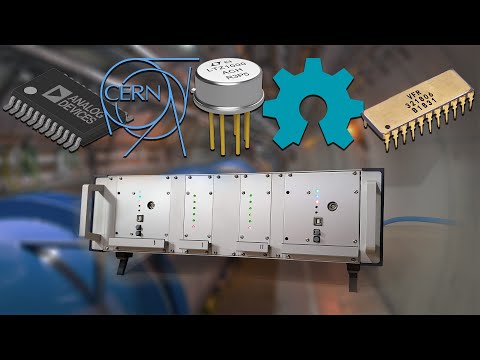
A tour of CERN's open source high resolution voltmeter, valued for showing how careful system design around a standard ADC reaches metrology grade precision.
Cited in PCB layout debates as the case against mixing decoupling capacitor values, arguing parasitics make a spread of values noisier than a single one.
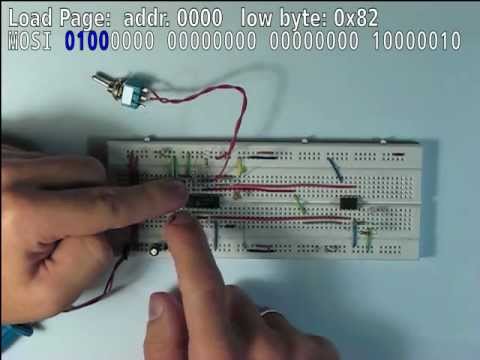
A demonstration of programming an AVR microcontroller by hand over SPI, shared as an impressive curiosity rather than a practical method.
Ben Krasnow uses a scanning electron microscope to make voltages on a live chip's surface visible, linked when people ask whether electric fields can be seen.
Demonstrates rewinding a microwave transformer for very high current; linked for the technique, alongside clear warnings that this kind of project is dangerous.
Entry point to Behzad Razavi's Electronics 1 and 2 lecture series, a university microelectronics course that students recommend as a companion to his textbook.
Part two of Ben Heck's Raspberry Pi handheld console build, admired as an ambitious example of portable gaming hardware and battery repackaging.
Cited for a moment showing popcorn noise from a semiconductor and for illustrating how microvolt level readings react to the slightest air movement.
Walter Lewin's lecture arguing that Kirchhoff's loop rule fails with a changing magnetic field; cited in debates about what a voltmeter reads around an induced EMF.
Bob Pease and colleagues discuss oscilloscope probing, including magnetic noise pickup in the ground lead; cited for its remarks on floating scopes and measuring switchers.