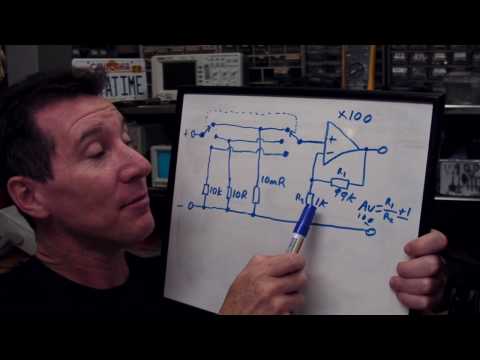
1 EEVblog #859 - Bypass / Decoupling Capacitor Tutorial
Dave Jones explains why decoupling capacitors are needed, how parasitics limit them, and why mixing values in parallel is not as simple as adding capacitance.
Audience
You know the basics and want to go deeper.
Dave Jones explains why decoupling capacitors are needed, how parasitics limit them, and why mixing values in parallel is not as simple as adding capacitance.
Rick Hartley's talk on grounding and return current paths in PCB design, praised as dense with practical EMC insight that formal courses often miss.
Dave Jones presents a low part count soft latching power switch built around a P-channel MOSFET and push button; hobbyists use it as a starting point for one-button power control.
Demonstrates a microcontroller running through the protection diodes on its I/O pins with the supply pin disconnected; cited whenever a supposedly unpowered chip keeps working.
Ben Heck's attempt to drive a salvaged LCD panel, usually linked to show how hard reusing bare screens is and why buying one is easier.
First part of Dave Jones's series designing a lab power supply with op-amp voltage and current regulation; recommended as an introduction to bench supply design.
Alan Wolke's back-to-basics walkthrough of op amp circuits, recommended for understanding how the common configurations behave before building analogue stages.
Dave Jones measures how much solder over exposed traces lowers resistance, finding roughly a 50 percent cut on 1 oz copper; cited for high current PCB traces.
Dave Jones explains how lithium-ion and lithium-polymer cells are charged, including the constant-current and constant-voltage stages, for people building or choosing a charger.
Shows how to reuse a broken laptop's LCD panel by pairing it with a controller board; pointed to when people want a cheap screen for a Raspberry Pi.
Dave Jones walks through designing a switch-mode supply around the MC34063, often pointed to as a hands-on introduction to buck and boost converters.
Dave Jones builds a constant current dummy load from an op-amp, MOSFET and shunt resistor for testing supplies and batteries; a common starting design for DIY loads.
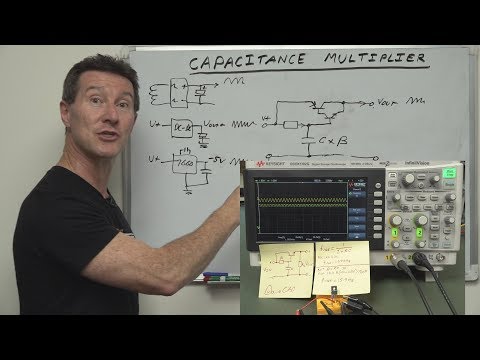
Dave Jones shows that linear regulators reject little high frequency ripple and demonstrates a capacitance multiplier as a cheap fix; a regular link in ripple filtering questions.
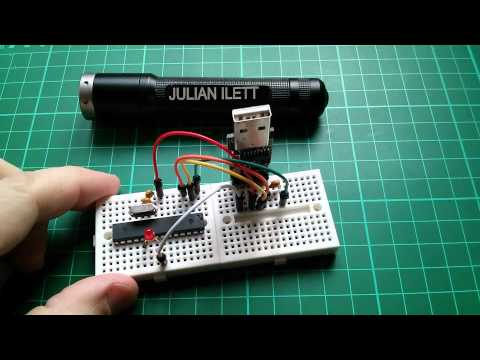
Julian Ilett builds a standalone ATmega328P Arduino for about five dollars, a common starting point for people making their own Arduino-compatible boards.
First part of Dave Jones's PCB design for manufacture tutorial, full of practical tips such as solder mask pullback; usually recommended with part 2 for automated assembly.
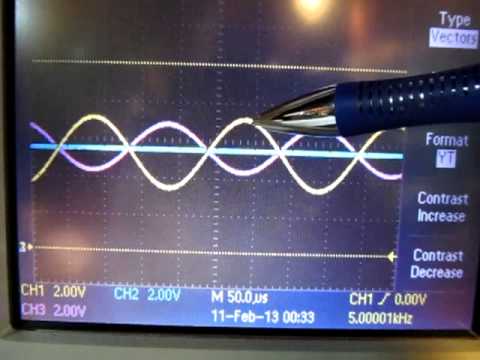
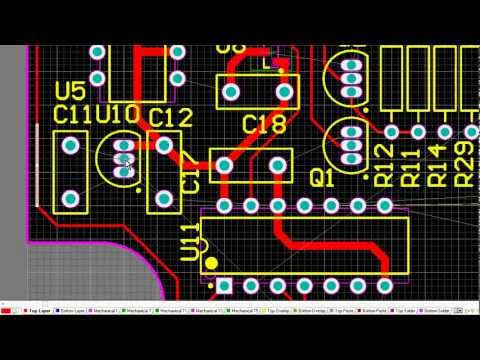
Dave Jones visualises bypass capacitor behaviour; usually linked alongside his bypass tutorial when people ask how to choose values and place decoupling capacitors.
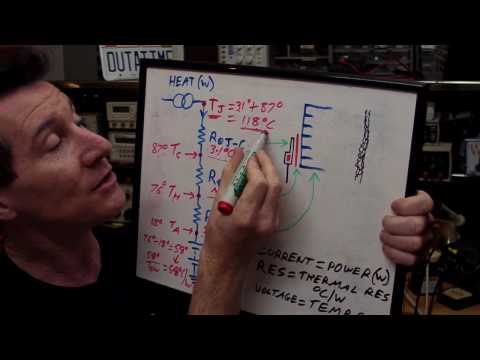
Dave Jones's tutorial on calculating thermal resistance and sizing a heatsink, routinely linked when someone asks how hot a regulator or transistor will run.
Builds a simple fast-edge pulse generator from a Schmitt trigger inverter and uses it with an oscilloscope as a makeshift time domain reflectometer for cables.
A professional demonstration of drag soldering a fine-pitch surface mount chip, linked to show that small packages can be hand soldered with flux and a steady drag.
Dave Jones explains how passive x1 scope probes work and why their bandwidth is far lower than x10; cited when fast signals look wrong through a switchable probe.
Alan Wolke compares split, single and virtual-ground supplies for op amps; people use it to work out how to bias inputs from a single battery.
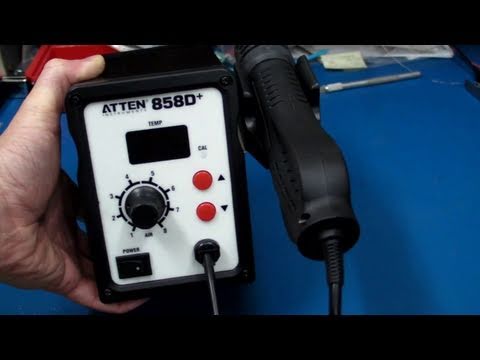
Dave Jones reviews the budget Atten 858D hot air rework station; people cite it when choosing a first hot air tool for SMD work.
Widely cited interview with Rick Hartley on PCB grounding, often linked to argue for one solid ground plane rather than split analogue and digital grounds.
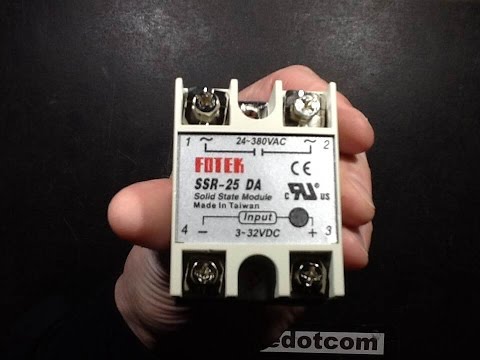
Big Clive opens a cheap eBay 25A solid state relay and finds a triac rated well below the label; cited when people ask what is inside these SSRs.
Explains how a shift register can scan many buttons or inputs from a handful of Arduino pins, sometimes linked alongside the same creator's output video.
Dave Jones builds peak detectors from a simple diode and capacitor up to precision op-amp versions; a frequent reference for envelope and pulse detection projects.
Ben Heck's portable Raspberry Pi build, cited for the cheap LCD he reuses, its voltage limits and the ports he removes from the board.
Short demonstration of drag soldering fine-pitch SMD pins with a bead of solder; answerers recommend it alongside the advice to use plenty of flux.
Builds a cheap high-power dummy load from enamelled copper wire submerged in a bucket of water; people have copied it for battery and supply testing.
An Adafruit guide to turning a cheap Motorola Atrix Lapdock into a Raspberry Pi laptop, a frequent answer when portable Pi builds come up.
Afrotechmods explains a discrete MOSFET H-bridge motor speed controller; suggested for people moving beyond driver modules to understand the basics.
Alan Wolke explains discrete transistor current sources and mirrors, ending with LED driving and compliance voltage; suggested as an alternative to an LM317 current source.
Dave Jones shows how a microcontroller's square-wave output can drive a charge pump to double its supply voltage; suggested when a small higher-voltage rail is needed.
Dave Jones covers measuring power supply ripple and noise with an oscilloscope; a 40 minute episode cited when probing switching converters shows misleading spikes.
Dave Jones's EEVblog series designing a precision bench power supply from scratch, valued for showing a working engineer's reasoning as much as the circuit itself.
Dave Jones captures an infrared remote's signal on a scope and reproduces it with an Arduino, recommended for understanding IR protocols and carrier modulation.
Andreas Spiess explains why many cheap Arduino soil moisture sensors give poor readings and shows a fix; cited by people building or modifying capacitive sensor boards.
GreatScott's 10x10 LED matrix build using addressable LEDs, often held up as a good starting point for wall-mounted LED displays and backlit panels.
Shared in debates about how energy actually travels in a circuit, giving a field based picture that complements the Veritasium discussion.
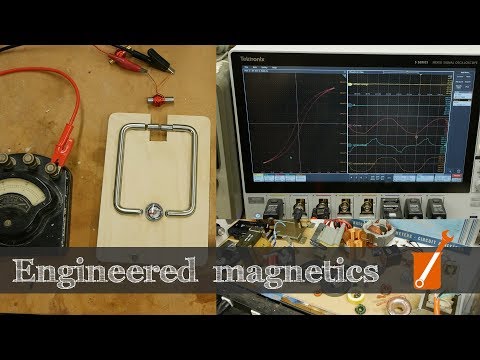
Recommended as a practical grounding in magnetic cores and BH curves, aimed at inductor design but useful for anyone puzzled by ferrites and magnetism.
A W2AEW video comparing the three basic BJT amplifier configurations, recommended for understanding gain and why common emitter is the usual choice.
Dave Jones measures the parasitic capacitance between solderless breadboard rows, cited when stray picofarads upset crystals, small capacitors or fast circuits.
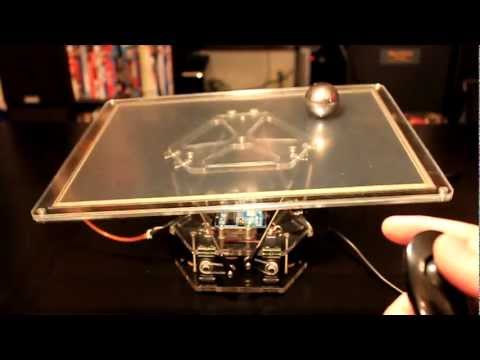
A demonstration of an Arduino-driven Stewart platform balancing a ball, cited as a showpiece for PID and control-system projects rather than as a tutorial.
Monty Montgomery demonstrates sampling and reconstruction on real equipment, widely cited on the Nyquist theorem and why CD-quality audio is enough.
Andreas Spiess builds an ESP8266 sensor that runs 17 days on a coin cell using deep sleep; a common starting point for battery-powered Wi-Fi sensor projects.
Connects a Raspberry Pi to a salvaged laptop LCD panel through an LVDS controller board; offered as a basic example for people reusing old screens.
Alan Wolke gives a gentle introduction to the BJT differential pair and how it forms an op amp input stage; people build and simulate along with it.
A showcase of an 8x8x8 LED cube in action, linked as inspiration for ambitious LED projects and as an example of what multiplexing makes possible.
A conference talk by Kemet's James Lewis comparing capacitor types, their weaknesses and derating, including how ceramic values drift with voltage and after reflow.
Big Clive demonstrates several ways to run an LED as a mains indicator on 120 V and 230 V, recommended when resistor-only circuits overheat or reverse voltage harms the LED.
Walter Lewin's MIT lecture on induction, cited mainly as the source of the two-voltmeter experiment that ElectroBOOM disputes, and as a demonstration of Faraday's law.
Alan Wolke demonstrates transmission line terminations and reflections on an oscilloscope, including standing waves on an unterminated line; people credit it with making reflections understandable.
Dave Jones explains how a Cockcroft-Walton voltage multiplier works stage by stage; answerers link it instead of writing the explanation out again.
Linked when a cheap constant current LED driver module comes up, mainly for its demonstration of the module's PWM dimming input.
A long walkthrough of designing a custom STM32 microcontroller board, often suggested as a starting point for people moving beyond Arduino to their own PCB.
Part 1 of a tutorial linking a Raspberry Pi and an Arduino over nRF24L01+ radios; often cited by people following it who then ask for help.
Dave Jones explains why designers use several electrolytic capacitors in parallel instead of one large one, mainly to lower ESR and spread the load.
Dave Jones explains the basics of driving a bare segment LCD from simple IO pins, recommended to people who have wired one up as if it were an LED display.
CNLohr tests ESP8266 Wi-Fi range, including with an external antenna; cited as a benchmark when people's modules perform worse than expected.
Shows how to put an ATmega328 into deep sleep and wake it with interrupts or the watchdog, reaching microamp currents on a bare chip.
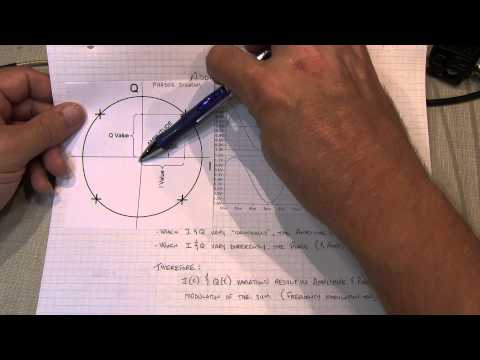
Alan Wolke explains IQ signals, modulation and demodulation with oscilloscope demonstrations; praised as one of the clearest introductions for people learning software-defined radio.
Demonstrates how ferrite beads filter high-frequency noise, suppress EMI and damp parasitic oscillation; praised for clear demonstrations, though some find it long.
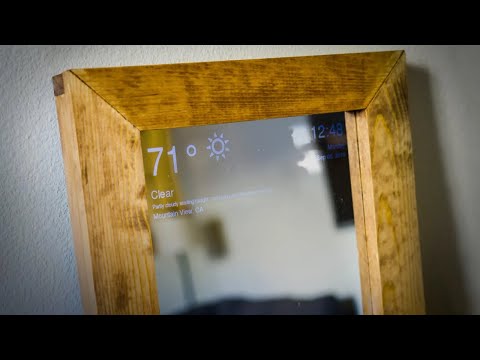
A complete walkthrough of building a Raspberry Pi smart mirror, valued for listing every part and showing the frame construction step by step.
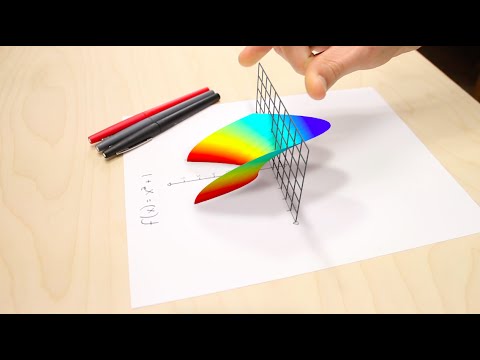
The first part of a visual series on imaginary numbers, recommended to engineering students struggling with the complex maths behind phasors and reactance.
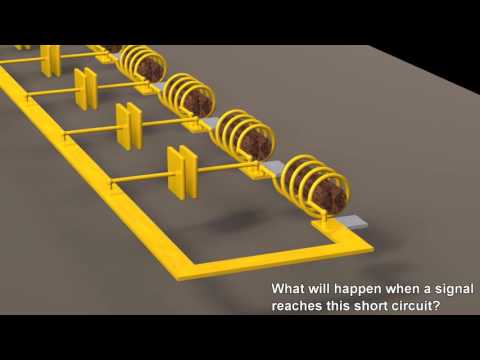
An animated explanation of signals travelling and reflecting on transmission lines, linked in questions on trace impedance, bus termination and voltage doubling at an open end.
Adds a current limit to a cheap buck/boost module with a sense resistor and comparator; people borrow the circuit for CC/CV chargers and motor supplies.
Ben Eater builds the logic that turns a 4-bit value into seven-segment digits using plain gates, praised as a clear introduction to combinational design.
Dave Jones walks through designing and ordering a custom multiplexed LCD for his bench supply project; recommended to anyone weighing up a custom display.
A w2aew demonstration of why boards use several decoupling capacitors of different values in different places, and what that does to the supply rails.
A w2aew tutorial on measuring a circuit's output impedance with an oscilloscope, regularly given as the practical answer to source resistance questions.
Applied Science builds a working liquid crystal display by hand, and the video is shared as a clear way to understand how LCD segments switch.
DIY Perks builds a bright battery-powered LED panel for video work; people copy the design and ask how its potentiometer and resistor set the converter's output range.
Andreas Spiess covers ESP8266 sleep modes and measures its current spikes; cited both for low-power design and for why the module needs decent supply capacitance.
An InvenSense engineer explains combining accelerometer, gyroscope and compass data, recommended for understanding why integrating accelerometer readings into position drifts badly.
A teardown and analysis of a cheap USB power supply, cited when people ask how to test chargers and whether bargain units are safe.
w2aew walks through an R-2R ladder DAC using Thevenin reduction and superposition, cited as a worked example of both circuit analysis techniques.
Dave Jones works through the design of the uCurrent, cited for his comparison of three ways to generate a negative supply rail for an op-amp.
A build guide for a home made bench power supply based on an LTC3780 module that several people have copied or adapted for their own bench.
A w2aew explanation of how JFETs and MOSFETs operate, offered as a clearer route to understanding field effect transistors than a text answer.
Explains how to bias a transistor stage so the operating point does not depend much on the device's beta, using feedback.
Dave Jones looks at a microcontroller costing about three cents; linked in threads on picking tiny, cheap parts and on splitting a job across several small chips.
First part of Ben Eater's series building a VGA video card from logic chips on a breadboard; recommended for understanding VGA timing and the effort involved.
Explains the Vbe multiplier, or rubber diode, and how it sets bias in class B output stages; the usual link when someone uses plain diodes instead.
A practical tutorial on phase locked loops that people link when someone needs to see a PLL such as the NE567 working rather than read theory.
ElectroBOOM's reply to the Veritasium electricity video, widely offered as the clearer and more entertaining account of how energy actually travels along wires.
Measures how much adding solder to high-current PCB tracks lowers resistance, finding about 30 per cent; cited alongside Dave Jones's similar test in track-width discussions.
Ben Eater captures a USB keyboard's signals on an oscilloscope and works through the protocol manually, recommended to anyone trying to understand USB at wire level.
Ben Eater starts building a 6502 computer on breadboards, single-stepping the clock to watch the bus; a frequent starting point for people building their own.
CNLohr demonstrates WebSockets on the ESP8266 streaming real-time stats at hundreds of updates per second; cited as evidence of how responsive the chip can be.
Linked for its clear explanation of a current source circuit and as an entry point into a well regarded analogue electronics channel.
Shows an Arduino cutting its own power through a transistor after a button press, offered as an example for battery projects that need near-zero standby current.
A long lecture on Maxwell's equations, praised for making magnetic fields understandable, though it leans towards physics rather than practice.
Ben Eater builds a JK flip-flop and shows why it works only intermittently because of a race condition, cited to settle questions about his earlier latch schematic.
An overview of the cheap A7 GSM and GPS module, recommended when a project needs both mobile data and positioning on a budget.
Shows how to reflash a cheap HC-05 Bluetooth module with RN-42 firmware so it can act as a keyboard style HID device.
Linked to show crossover distortion in op amps such as the LM358, usually when someone's amplifier output is unexpectedly distorted or audibly rough.
A demonstration of a self balancing robot driven by a 555 timer, linked as an example of simple analogue motor control without a microcontroller.
Recommended as a Signal Path tutorial that designs and measures a single transistor common emitter amplifier, pitched as a fairly basic introduction to class A gain stages.
Quantum Leaps' long embedded systems programming course, repeatedly recommended as a thorough, well explained route into low level ARM microcontroller work.
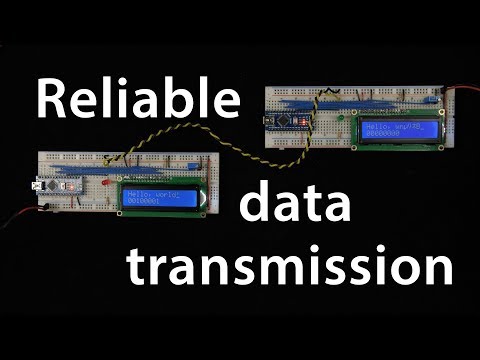
Ben Eater video on sending data reliably from one Arduino to another, which a couple of viewers praise as an excellent and detailed explanation.
Builds a simple octopus curve tracer that plots component I-V curves on an oscilloscope; recommended as a cheap way to see a diode's knee voltage.
Signal Path tutorial on class B and class AB output stages, recommended for learning how an output stage drives a speaker and why the bias diodes are there.
Alan Wolke makes RF standing waves on transmission lines visible on the bench; recommended for building intuition about reflections, SWR and quarter-wave transformers.
Dave Jones explains why digital oscilloscopes look noisier than analogue ones, often linked when a new scope's trace looks fuzzy or someone claims analogue has infinite resolution.
Mike of mikeselectricstuff shares practical tips for fast hand SMD assembly, including taping component strips to the bench; credited with improving people's assembly speed.
DIY Perks builds an over-discharge cut-off for lithium cells using a low-voltage alarm module to trigger a relay; used as the starting point for home-made protection boards.
w2aew shows how to build a low-inductance scope probe socket into a board; recommended for measuring fast edges and switching spikes without ground-lead ringing.
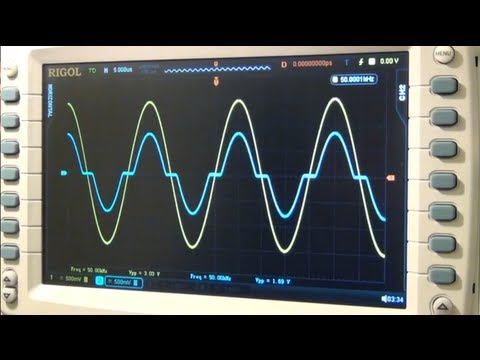
Explains why a function generator output can read twice the set amplitude on a scope without a 50 ohm termination, and how termination fixes it.
Dave Jones explains decibels for engineers, including dBm, and is the standard link when someone asks why dB is used for signal-to-noise ratios and Bode plots.
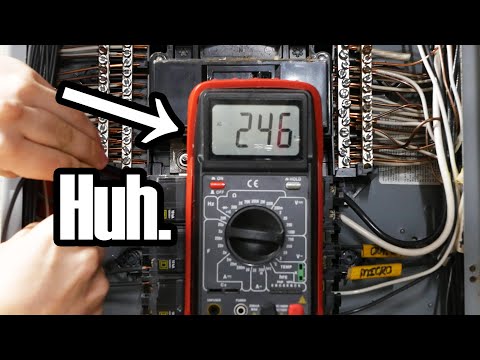
Referenced for a detailed look at how American service panels are laid out and why 208 and 240 volt supplies differ.
Covers how an op amp's gain bandwidth product and slew rate limit a closed loop circuit, used to explain unexpected bandwidth results.
Shows how to measure capacitance and inductance using an oscilloscope and a cheap pulse generator with fast edges built from a Schmitt trigger inverter.
Dave Jones explains how segment LCD panels work and are driven, useful when reverse engineering or repairing a bare display.
Big Clive tests whether over-discharged lithium cells are safe to recharge and how to check them for damage; cited in debates about deep discharge.
A lecture on why lithium-ion cells degrade and how to extend their life, cited for an expert view on cell strain and on battery longevity.
Neso Academy's long Signals and Systems lecture playlist, repeatedly praised by engineering students as the resource that got them through the module.
Builds a simple three-transistor sawtooth oscillator and shows it running on a scope; people copy the circuit but report it gets finicky at higher frequencies.
A demonstration of soldering a leadless QFN chip with a hot air station, used as a guide by people hand assembling fine pitch surface mount parts.
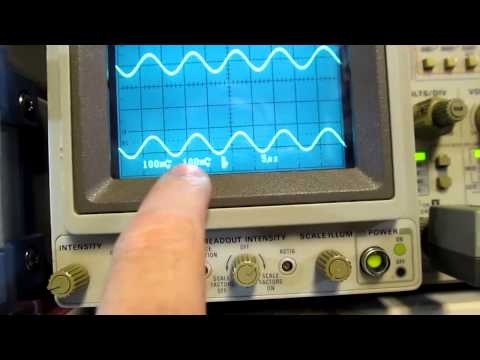
A w2aew tutorial on measuring a capacitor's ESR with a function generator and oscilloscope, recommended when diagnosing failing electrolytics in repair work.
Mr Carlson presents his own low voltage capacitor leakage tester, admired by people restoring old equipment who want to check capacitors out of circuit.
Brian Douglas explains gain and phase margin and what they say about closed-loop stability; recommended to students of feedback and amplifier stability.
Part four of Dave Jones's lab power supply series covers PWM control filtered to an analogue voltage; also cited for spotting probing artefacts on a scope.
Explains how a DC-DC boost converter steps voltage up with an inductor, switch and diode; the usual link for people puzzling over cheap USB step-up modules.
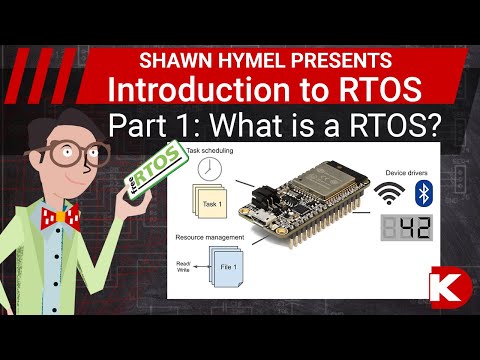
Shawn Hymel's Digi-Key playlist introducing FreeRTOS concepts on an ESP32 within the Arduino framework, suggested as a gentle first step into real time operating systems.
A Ben Heck build using a Pixy camera to track and follow objects, offered as a starting point for colour based tracking projects.
AlphaPhoenix recreates the Veritasium circuit geometry and measures it, offered as the hands-on companion to the debate over how energy travels along wires.
A thorough range comparison of nRF24L01 module variants and antennas by iforce2d, with graphs and a downloadable results spreadsheet.
GreatScott builds a DIY buck converter with an Arduino driving a MOSFET, cited as a clear way to understand how step-down switching converters work.
N-O-D-E's guide to turning a Pi Zero into a USB dongle computer accessed over SSH, widely followed for compact headless Pi projects.
Short demonstration of swapping the long probe ground lead for a ground spring; often cited on electronics.stackexchange.com when a noisy scope trace is really a probing artefact.
A practical video on reading strain gauges from a salvaged scale, linked for its schematic when people ask how to build a weight sensor.
Dave Jones tests an initial production batch of boards; cited for test traces brought out to the panel edge for functional testing before depanelling.
Dave Jones shows automated testing of PCBs while still panelised, cited for test points and for traces routed across snap-off tabs.
Dave Jones explains op-amp input bias current and the offset it creates across input resistors, linked when an amplifier's output sits away from the calculated value.
Part two of Dave Jones's design for manufacture series, recommended to anyone taking a prototype to a production PCB.
Dave Jones explains PCB spark gaps; cited in discussions of spark gaps and gas discharge tubes as protection against high-voltage transients.
Dave Jones revisits a discrete-logic digital clock he designed years ago, useful for understanding mains-frequency timekeeping and old-school logic design.
Eric Bogatin explains with Robert Feranec where return current really flows and why split planes cause trouble; repeatedly recommended for anyone routing signals between layers.
Hidden gemA practical demonstration of how the length of a scope probe's ground connection distorts fast edges, cited whenever ringing or probe grounding questions arise.
A mikeselectricstuff video on ordering ordinary circuit boards to act as neat front panels, suggested as the cure for rough hand-cut project cases.
Dave Jones's reply to the Veritasium electricity video, used in debates about how energy travels along wires and when transmission line thinking actually matters.
Dave Jones works out how to drive a vacuum fluorescent display bought from eBay, useful for anyone reverse engineering one without documentation.
NASA's avionics soldering procedure, thorough to the point of excess for hobby work but valued for reliability-critical builds and its flux cleaning section.
Dave Jones tests whether bypass capacitors matter in practice, usually linked alongside his companion decoupling tutorials when questions about choosing decoupling capacitors come up.
Ben Heck builds a bare AVR development board from the chip up, used to show what an Arduino actually contains and how to work without one.
An EEVblog video demonstrating audible whine from ceramic capacitors, linked when people ask why a circuit board is making a high pitched noise.
A build walkthrough for a large 18650 power bank with a BMS, often cited as a clear example of how such a pack goes together.
Dave Jones demonstrates how ceramic capacitor value falls under DC bias, cited whenever someone asks about swapping or uprating capacitors.
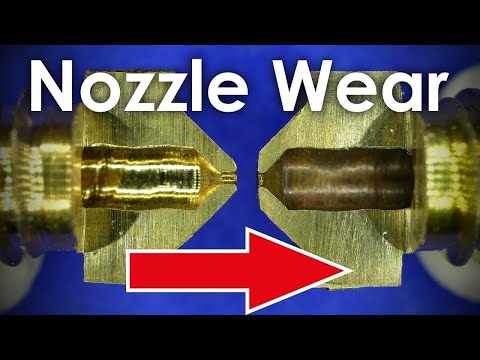
CNC Kitchen measures how abrasive filaments wear printer nozzles, cited for judging wear by nozzle length and for choosing a hardened nozzle.
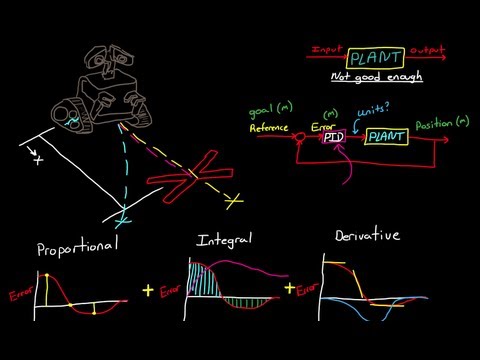
Brian Douglas's introduction to PID control, repeatedly recommended as the first thing to watch before tuning a loop for motors or robots.
An introduction to the cascode amplifier and why it tames the Miller effect, offered as a starting point when the topic comes up.
GreatScott turns an Arduino into a programmer for the ATtiny85, the usual pointer when someone wants to shrink a project onto a smaller chip.
Walks through several cheap ways to shift logic between 5 V and 3.3 V and compares how each holds up as frequency rises.
Dave Jones builds a 555-based PWM LED dimmer, used as a worked example of timer circuits, steering diodes and duty cycle control.
Andreas Spiess explains running code on both ESP32 cores from the Arduino IDE, including passing data between tasks and keeping them in step.
A frequently cited explanation of changing Arduino PWM frequency with a dedicated library, the second part of a PWM tutorial series.
Recommended as a dependable explanation of how buck and boost converters change DC voltage, useful if you want to build one rather than buy a module.
Praised as a visual walk-through of the I2C protocol, driving the bus by hand so each clock and data transition can be seen.
A w2aew explainer on analogue panel meters, praised for teaching how to characterise and drive them, often paired with his follow up video.
Hidden gemDemonstrates synchronising AC generators with sync lamps, cited when people ask how generators are matched to the grid or to each other before connection.
A SparkFun video suggested as a first stop when making an Arduino act as a USB keyboard or other HID device, with links to further resources.
A demonstration of using a Wii remote's infrared camera to track IR LEDs, often cited for cheap DIY position tracking and light pen ideas.
Recommended for understanding cheap radar motion sensor modules, comparing several and testing how they behave as an alternative to PIR.
Shows a dual-boot Raspberry Pi image that switches between RetroPie and a Kodi build from inside either system, with a ready-made SD image available.
A GreatScott build of an ultrasonic mist maker, linked when people ask how to drive a piezo element at megahertz frequencies from a DC supply.
ElectroBOOM's follow-up on whether Kirchhoff's voltage law holds in a changing magnetic field, recommended as a careful response to Walter Lewin's lecture demonstration.
Dave Jones laying out a real power supply board, often named as the main video to watch for PCB layout best practice once a schematic exists.
A walkthrough of wiring a salvaged portable DVD player screen to a Raspberry Pi, linked for cheap display options when buying new is not wanted.
A guide to streaming PC games from a desktop to a Raspberry Pi 2 connected to a television; linkers found it detailed enough to follow.
A Louis Rossmann video arguing that reflowing a failed graphics chip is a temporary fix at best, cited when someone hopes to revive a dead board.
Cited to explain how a transistor driven into breakdown shows negative resistance and can be made to blink an LED as a simple oscillator.
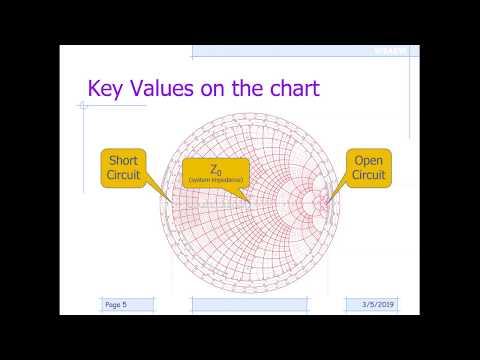
W2AEW walks through Smith chart fundamentals and finishes with an L network matching example, recommended as a clear RF primer.
A Raspberry Pi pirate radio demo, linked as inspiration and a starting point for turning a Pi into an FM transmitter.
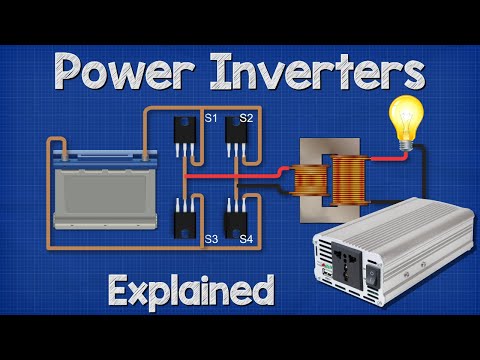
Linked alongside MOSFET and inverter discussions as a helpful explanation of power switching, and suggested as a project worth recreating with a microcontroller.
Explains a push-on, hold-off soft power switch built from transistors with a readable schematic; recommended for battery projects that want one button for power and input.
A scope demonstration of the voltage spike an inductor or relay coil produces when switched off, used to explain why flyback diodes matter.
Phil's Lab tutorial on PCB vias, covering why signals changing layers need a nearby return via and how ground stitching ties planes together.
Thomas Sanladerer tests twelve bed-levelling sensors, cited for finding that inductive probes are the most precise but depend heavily on the bed material.
Dave Jones shows how to charge Li-ion and LiPo cells from a bench supply using constant current then constant voltage; followed by people charging single 18650 cells.
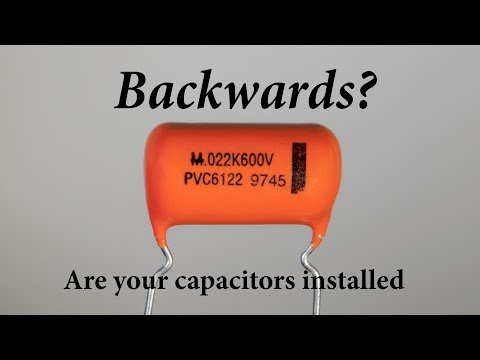
Cited to show that a capacitor's plate orientation may affect audio circuits owing to how the part is constructed.
Mr Carlson documents his toner-transfer process for making double-sided circuit boards at home; people report reliable results when following it with its companion video.
Demonstrates a polarised DC breaker failing when wired in reverse, with the arc sustained inside it; cited when people ask whether breaker polarity matters in battery systems.
A demonstration of streaming PC games to a Raspberry Pi with Limelight, shared to show the playable performance you can expect.
The time fountain that strobes LEDs over falling water drops, cited by several Arduino builders as the inspiration for their own attempts.
Andreas Spiess walks through the cheap A6 GSM module, recommended for getting it powered, reset and talking over AT commands from an Arduino.
A w2aew tutorial on how a common emitter BJT amplifier's gain and frequency response are set by its external components, backed by bench measurements.
A demonstration of using ordinary and PIN diodes as signal switches, cited when people ask how to switch low level audio or high frequency signals electronically.
Shows a QFN package being soldered with only an iron by heating the board from the underside, offered as an alternative when no hot air station is available.
Applied Science explores how e-ink displays work internally while pushing their refresh rate, cited for understanding the panels before driving one yourself.
A demonstration of alternating magnetic fields, including levitating conductive rings and a travelling wave, referenced when people ask about induction and levitation.
A tutorial for turning a Pi Zero into a USB dongle computer networked through the host machine, which one user confirms works on a plain Pi Zero.
A bigclive video on white LEDs that explains why some packages contain several junctions in series and raises doubts about the quality of cheap sourced parts.
A demonstration of the KiCad interactive push and shove router from the CERN developers, linked to show how tracks can be dragged and rerouted in OpenGL mode.
A guide to setting up auto bed levelling on a 3D printer with an inductive sensor, including how to drop its 12 volt output safely for an Arduino input.
An EEVblog teardown of a Rigol oscilloscope, cited for details of its internals such as the switching supply, relay count and build quality.
An Afrotechmods explainer on peak detector circuits, repeatedly suggested to people trying to capture the maximum level of an audio or sensor signal.
A walkthrough of installing an OpenVPN server on a Raspberry Pi; two people report following it without problems and the comment section helps with troubleshooting.
Argues that X and Y steps should come from the hardware maths rather than test prints, while extruder steps do need calibrating; cited often in 3D printing answers.
GreatScott builds a class D audio amplifier with an LC output filter; liked as a project, though followers note details missing from the schematic.
Covers compiling Marlin for Creality's 32-bit V4 board and adding a BLTouch probe; recommended for Ender 3 upgrades, though its wiring assumes earlier videos.
An explanation of heterodyning and intermediate frequencies in radio receivers, recommended as a clear introduction, with an audible demonstration of beat frequencies.
A 3Blue1Brown visual explanation of divergence and curl in the context of Maxwell's equations, praised for making the maths behind electromagnetism intuitive.
Dave Jones's EEVblog review of the Quick 861DW hot air station, cited when people recommend it as a good value rework tool.
Dave Jones works through a remote control hack, covering IR carrier signalling and how button matrices work, recommended before building your own IR project.
Dave Jones on getting heat out of surface mount parts through the board, recommended for understanding thermal resistance and the electrical analogy for heat flow.
An EEVblog teardown of a programmable bench power supply, cited for its remote interfaces and a note on tinned exposed traces for current.
Dave Jones explains chopper and auto-zero op-amp techniques and why they suit low offset current measurement, cited as the usual primer on the topic.
An explanation of decoupling capacitors and why fast switching edges cause supply voltage dips, recommended as clearer than most on the subject.
Linked as a fix for FT232RL FTDI USB serial adapters that appear bricked, restoring the USB product ID so the board is recognised again.
Recommended as the way to get Atmel Studio 7 uploading to an Arduino Uno through its bootloader, so no separate programmer or debug hardware is needed.
Ben Eater probes a 10BASE-T link with an oscilloscope and decodes the Manchester-encoded bits by hand; part of his networking series and a common starting point for line-coding questions.
Offered as a dedicated playlist for learning how op-amps work and how to use them in circuits.
Pointed to as a reasonable explanation of how a resolver works and measures shaft angle, linked as an example of its operation and applications.
Recommended for learning to derive the transfer function of an op-amp circuit, but it assumes an ideal op-amp with infinite open-loop gain.
Shared as a short warning about feeding power back into a host's USB port, which breaks the specification and can damage the computer.
Recommended Andreas Spiess video on a MOSFET latch that lets a microcontroller hold its own supply on after a button press, then cut it off when finished.
Opening part of a lecture series introducing op amps and nodal analysis around them; suggested to students stuck on op-amp circuit questions.
Shown as an example of the automated flying probe testers used in PCB production, mainly to illustrate what such equipment costs and does.
A build guide for a DIY USB microphone using an electret capsule and a JFET preamp, suggested as a rewarding audio project.
A demonstration of the curious ball bearing motor, which spins for no obvious reason, linked as an odd project along with a theory of why it turns.
Explains the working principle of a directional coupler using a homemade example like those inside SWR meters, cited in discussions of reflected power.
A case for leaving the Arduino IDE in favour of Atmel Studio, suggested to hobbyists wanting a more professional AVR workflow or an embedded career.
A short clip of eight TPIC6B595 shift registers driving a large 12 V LED segment display, posted by the board's builder as a working example.
A spectrum analyser teardown linked for one memorable section where unusual RF construction baffles even the presenter.
Linked as a clear explanation of how GSM mobile phone traffic can be intercepted, offered as background rather than a build guide.
Cited for showing how to drive WS2812 style addressable LEDs directly from a microcontroller without relying on a library.
Zach Star introduction to the Laplace transform, recommended to engineering students who find control theory and signal maths intimidating.
w2aew tutorial on varactor diode behaviour with real measurements and a VCO circuit demonstration, linked when tuning diode questions arise.
Andreas Spiess covers building a small battery backup that lets a Raspberry Pi shut down cleanly during a power cut, praised as a good overview of the challenges.
Hidden gemMeasures how much filament a hotend can melt before under-extrusion sets in as print speed rises; cited when people tune printers for high speed.
A short demo of a sound reactive WS2812B strip effect driven by an Arduino Nano and MEMS microphone, shared by its maker as an example with code.
Dave Jones tears down a Hakko FX-888 soldering iron and modifies its indicator LED, giving a look at build quality along the way.
A hobbyist replacing a car starter battery with a supercapacitor bank, often cited in debates about whether the idea is practical outside of experiments.
Thomas Sanladerer's series tests and compares 3D printing filaments with a methodical approach; recommended for judging the strength and flexibility of brands and designing your own tests.
Hidden gemBig Clive takes apart an arc lighter and draws out its circuit, cited for the schematic and estimated electrode voltage.
Big Clive examines some USB power supplies and finds poor isolation, used to show how a mains charger can fall short on safety.
Recommended as the best explanation of MOSFET H-bridges, including how to drive the P channel high side and other FET design issues that basic guides miss.
Hidden gemA music-reactive LED strip project that people point to as a template for their own room lighting, with hardware and code details in the description.
A Japanese project that uses an Arduino to turn a KS0108 graphic LCD into an extra Windows display, often linked as a curiosity when people ask about LCD controllers.
A Raspberry Pi based Ambilight clone that lights the wall behind a television from its HDMI signal without a PC, recommended to people wanting the same effect.
Shows surface-mount parts soldered with paste and hot air, with components pulling themselves into place as the solder melts, which people find convincing.
A slayer exciter Tesla coil build guide that two people found clear and usable, while one critic questions its fix of paralleling burnt transistors.
Shows how a signal generator plus a scope set to XY display can plot a diode curve without expensive equipment.
A GreatScott explainer on why a microcontroller pin struggles to switch a MOSFET quickly and how a gate driver circuit solves it.
Apparently a review of a multi cell lithium power bank, linked in discussions about charging and combining cells, with no opinions given on the video itself.
A guide to turning a spare computer power supply into a bench supply, linked both as a suggestion and as the plan people were following.
A Ben Heck build showing how to pack a Raspberry Pi and a small screen into a handheld, linked often for portable console ideas.
A short video on building a one bit analogue to digital converter, shared by Lady Ada and offered as a simple route from analogue signal to digital edge.
Shows Paul Stoffregen's Teensy based OctoWS2811 system driving thousands of addressable LEDs as a video wall, cited when people ask how to run large LED displays.
Opens EEVblog's six part conversation with Doug Ford on microphone design, recommended as a chance to hear a seasoned analogue designer reason through trade offs.
Dave Jones works through designing a constant current source, offered as inspiration and possible help for anyone building their own.
BigClive opens a lithium jump starter power bank, estimating its peak current with improvised methods and showing cable and cell resistance effects in practice.
Dave from EEVblog shows how to make a cheap magnetic field probe from a short coil and use it to hunt down EMI sources on a board.
A complete university Electronics 1 lecture playlist, recommended as a thorough refresher for engineering students who feel weak on analogue fundamentals before further study.
Dave Jones explains the layers of input protection inside a multimeter, including HRC fuses and shielding; often cited when someone asks whether a mistake has damaged their meter.
Hidden gemShows an Arduino driving a DMX light via the DmxSimple library with no RS-485 driver chip or shield; one viewer found it simple, others asked how it works.
Explains the WS2812 NeoPixel data protocol and its timing in detail, useful for understanding the signal even though it uses a non-Arduino microcontroller.
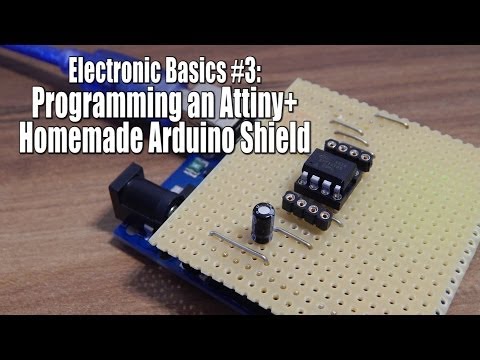
A simple tutorial on running a bare ATmega328P on a breadboard and burning its bootloader with an Arduino, though some steps may be dated.
Kate Gregory's CppCon talk on teaching C++ as its own language rather than C with extras, raised when Arduino code style comes up.
Julian's follow-up on two-pin colour-changing LEDs, explaining how the tiny built-in chip is pulsed to switch colours, relevant to Christmas light strings.
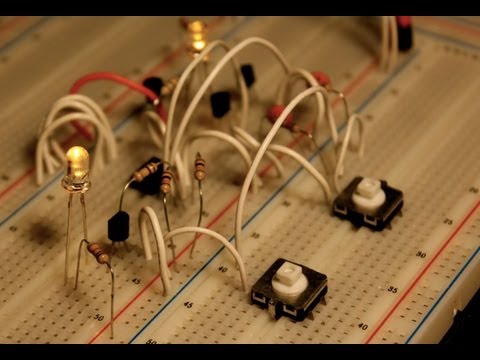
Dave Jones explains switch and relay contact bounce and the hardware and software ways to debounce it; recommended when microcontroller interrupts misfire on noisy inputs.
A Rohde and Schwarz explanation of the Smith chart, suggested alongside other tutorials for anyone learning RF impedance and matching.
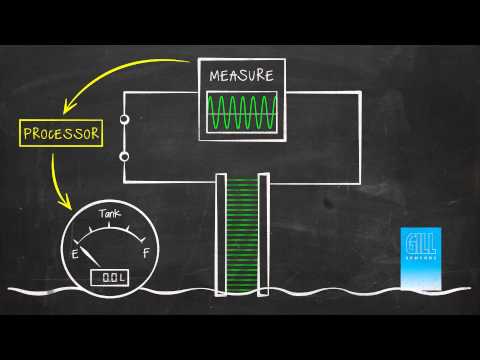
Explains capacitive liquid level sensing, the approach used in aircraft fuel tanks, and is recommended whenever someone wants to gauge liquid depth without moving parts.
A survey of alternative PCB etchants for home use, linked by people who prefer the hydrochloric acid and peroxide mix to ferric chloride.
An Arduino music visualiser build around the MSGEQ7 spectrum chip, pointed to as inspiration for sound reactive lighting projects.
EEVblog's look at reflowing boards in a converted toaster oven, cited both for the method and for how poorly ordinary oven thermostats hold temperature.
Walks through running an ATmega328 on a breadboard with a resonator as a minimal Arduino, recommended for cutting cost on permanent projects.
Used as a worked example of multiplexing several seven segment displays from one EEPROM, with a 555 timer and JK flip-flops providing the count.
Recommended for working through BJT voltage divider bias calculations, including replacing the base network with its Thevenin equivalent before analysing an amplifier.
An AlphaPhoenix experiment measuring how current actually travels along a wire, offered as an intuitive route into transmission lines and impedance matching.
Linked when people suggest the PirateBox project for a Raspberry Pi, including on a Pi Zero, with a note that it can be made portable.
GreatScott's first part of building a 5x5x5 LED cube, widely praised as a detailed and inspiring Arduino LED project.
Hidden gemCited as a hands-on build of a small step-up boost converter driven by an ATtiny85, used as a reference for DIY power conversion.
Teaches direct register control on the ATmega328P to speed up Arduino code, recommended as a clear step beyond digitalWrite.
Hidden gemCited as a GreatScott video that explains some of how USB-C works and shows a ready-made USB-PD trigger board being used to obtain a higher voltage.
GreatScott tracks down buzzing from a cheap Bluetooth audio receiver and tries fixes; recommended for ground loop noise and the isolated DC-DC converter cure.
EEVblog's walkthrough of unlocking a Rigol DS1052E to 100MHz bandwidth, cited when people weigh up which budget oscilloscope to buy.
A tutorial on wireless serial links between two Arduinos using XBee modules, suggested as a starting point even for people using cheaper radios.
Explains hardware debouncing of switches with an RC network feeding a Schmitt trigger inverter, part of a series people cite when cleaning up clock inputs.
Shown as a walkthrough for streaming live television to a Raspberry Pi media centre from a HDHomeRun network tuner over UPnP.
Shared as a straightforward demonstration of using an idler motor as a rotary phase converter to run three phase equipment from a single phase supply.
An EEVblog explainer recommended for understanding what Peltier modules can and cannot do, both as coolers and as small thermoelectric generators.
Recommended as a tutorial on bootstrapping the gate so an N-channel MOSFET can switch the high side of a circuit.
Shared as a practical explanation of driving LEDs at constant current with a shunt regulator and a transistor instead of a resistor per LED.
A Mr Carlson's Lab tour of a vintage Tektronix 555 oscilloscope, recommended to anyone learning about older test equipment and how it works inside.
An industry veteran explains why power grids settled on three phases rather than six or twelve, cited in debates about transmission efficiency.
Explains ghost voltages and how a meter's low impedance setting tells real mains voltage from induced readings, shared in safety discussions.
Ben Heck strips unneeded parts off a Raspberry Pi to build a compact camera, cited as the standard example of shrinking a Pi by desoldering.
Numberphile's look at Primer, a mechanical counter sculpture that finds prime numbers, which has inspired several hobbyists to build their own versions.
Brian Douglas's classical control theory playlist, credited by several people with making a difficult university subject understandable and covering the fundamentals well.
Hidden gemAn hour long MIT Open CourseWare lecture on circuits and circuit simplification, suggested for those wanting a thorough, university level grounding.
Kevin Lynch explains permanent magnet DC motor behaviour, including the speed torque curve, stall torque and motor constants, praised as a clear reference.
Jessa Jones shows diode mode measurements on an unpowered board compared against a known good one to locate faults; often cited in board repair questions.
A talk on building a squirrel tracking sentry gun with Python computer vision, shared as a starting point for camera based animal detection projects.
EEVblog measurement of many resistors showing how their values cluster, cited in debates about combining parts to improve precision.
Zach Star's intuitive introduction to the Fourier transform, recommended to engineering students finding signals and controls hard going.
A clear tutorial on biasing a common emitter BJT amplifier and picking collector and emitter resistors, cited by learners working through bias point and resistor ratio questions.
A hands on demonstration of PID control, linked to show what tuning the proportional, integral and derivative terms does in a real system.
Andreas Spiess works through powering an ESP8266 from a battery, covering the calculations involved, oscilloscope traces and adding a capacitor across the supply pins.
Ben Eater builds an Arduino Nano programmer for AT28C parallel EEPROMs, using shift registers for the address lines; people build it for their own projects.
A Signal Path tutorial on energy harvesting chips, recommended for anyone trying to turn tiny ambient sources into usable power; one section demos a low voltage AC input.
Derek Molloy's walkthrough of building a bare bones Arduino on a breadboard, suggested as a cheap step towards designing custom boards.
A companion video on programming custom LED animations, offered to people who have built an LED display and want to make it do more.
A GreatScott! guide to driving APA102 addressable LEDs from a Raspberry Pi, recommended as a solid walkthrough to follow.
One of a set of clock module videos using 555 timers for a home built CPU, covering the bistable switch that selects between the oscillator and a pushbutton.
A DIY induction heater build that people copy and refer back to, though at least one builder reported overheating MOSFETs.
Part of a tutorial series on programming 8 bit AVR chips in plain C, recommended for Arduino users ready to drop the Arduino layer.
Alan Wolke covers how mixers convert frequencies in radio receivers, including why switching produces harmonic products; recommended alongside his diode ring mixer video.
Andreas Spiess compares tools for measuring tiny and pulsed currents, from the Nordic Power Profiler Kit II to the Joulescope; recommended when a multimeter misses ESP32 current spikes.
A SparkFun tutorial on 4D Systems serial displays with their own built-in interface system, recommended for adding a graphical screen to an Arduino project.
A detailed guide to building a Raspberry Pi RetroPie console inside an NES shell, including wiring the original power and reset switches.
Ben Heck builds a portable graphical calculator from scratch, cited as inspiration for handheld projects and for his tidy soldering technique.
Andrew Mulholland sets up Bluetooth PAN networking on a Raspberry Pi 3 using a Mac as gateway; followed by people sharing a phone or laptop connection over Bluetooth.
Dave Jones demonstrates how to identify and track down common mode noise; pointed to when scope readings of small signals look swamped by interference.
Tektronix's explanation of transmission lines, recommended for building intuition about travelling voltage waves when a pulse is launched down a line.
Shows how to flash or program an ESP8266 module using an Arduino Uno as the serial adapter when no FTDI cable is to hand.
Final part of an open-source build that maps Wi-Fi signal strength into an image with a gimbal-mounted directional antenna and an SDR; cited for DIY RF imaging.
University lecture building a SPICE model of a PV panel from a current source and diode; people point to it for setting saturation current and plotting power curves.
Part of Ben Eater's 8 bit computer series, this one builds a register from D flip flops and is cited in questions about registers and RAM.
Demonstrates using the TLC5940 multi-channel PWM driver with an Arduino to run many RGB LEDs, suggested whenever someone needs more PWM outputs.
Explains bootstrapping the gate of a high-side N-channel MOSFET with discrete parts; people copy the circuit and simulate it in LTspice to check their understanding.
An EEVblog demonstration of op-amp gain bandwidth product, showing how cascading stages can extend bandwidth, cited to settle theory questions.
Linked as an example of Sharp memory LCD modules, offered as a low-power alternative to e-ink, though one commenter suspects they never caught on.
An EEVblog repair of a fire damaged power supply board, linked to show both how a small capacitor can fail and how charred board material is removed.
A demo of UV4L streaming between a browser and a Raspberry Pi, linked to show that browser based screen and camera casting works without add-ons.
An electronupdate teardown that decaps a Raspberry Pi's BCM2835 and inspects the board's power supply parts, cited for low level hardware details.
Demonstrates sending audio across roughly a hundred metres with a cheap laser diode and Arduino, cited as proof of range for optical data links.
Louis Rossmann runs through the tools on his repair bench and why he chose them, often linked for the microscope discussion.
Demonstrates the UV4L raspidisp driver streaming a Raspberry Pi's HDMI output to a browser over WebRTC without plug-ins; offered as a fast remote desktop alternative.
Alan Wolke explains how a diode ring mixer works and measures one on the bench; people build their own mixers from it and return with theory questions.
Shows an ESP8266 kept fully off through its CH_PD pin and powered up by an external interrupt; suggested for battery sensors that should only wake on an event.
Teaching Tech walks through fitting a BLTouch to an Ender 3 and configuring vanilla Marlin firmware; widely followed, including for clone probes on other printers.
A maker's short demo of a scaled down NES style Raspberry Pi console, cited as an example of a clean 3D printed case with a working reset button.
Linked as an example of sending digitised audio between Arduino boards over cheap nRF24L01 2.4GHz radio modules.
Andreas Spiess builds a low-power transmitter that sets radio-controlled clocks via DCF77, WWVB, MSF or JJY; cited when people ask about emulating a time signal.
Shows how a very high field laboratory magnet is built from stacked copper plates and insulators rather than wound wire, cited as an unusual coil construction.
A clock circuit for a homebrew 8-bit computer built from a 555 timer and logic gates, often copied by learners who then need help debugging it.
Shows a 1 kHz modulated laser being detected with a solar cell; often cited when people plan laser tag or detection projects, though it gives few circuit details.
Measures the input voltage thresholds of Raspberry Pi GPIO pins; often cited for the roughly 1.2 V switching point, though it tests an older Pi model.
Practical tips for designing power MOSFET circuits, including gate drive and dissipation calculations; offered as help for MOSFETs running hot or loading a microcontroller pin.
A demo of a cheap 3.2 inch SainSmart touch TFT running on a Raspberry Pi, linked as evidence that the display works.
A demonstration of combining RetroPie with XBMC on a Raspberry Pi, passed around as proof the setup works, with links in the description.
An explanation of an automatic audio level control circuit built with germanium diodes, shared as a worked example with a schematic.
Shows a way to run Windows programs on a Raspberry Pi under Raspbian using Wine; linked as a possible route rather than a tested one.
Offered a few times as an explanation of the low-level encoding behind basic radio modules, though commenters recall it only loosely.
EEVblog tears down the Rigol DS1052E oscilloscope, cited for what it reveals about the hardware, including the overclocked ADC parts inside.
GreatScott builds an ultrasonic mist maker from a piezo disc, 555 timer, MOSFET and inductor; often referenced when people ask how the drive circuit produces oscillation.